|
|
Our independent, investigative journalism about the U.S. food system is supported by members and donors like you.
|
|
Become a Member for $6/month
|
|
|
|
|

|
Rescuing Kelp Through Science
|
BY ALEXANDRA TALTY • July 17, 2024
|
Just off the shore in Casco Bay, Maine, marine scientist Scott Lindell descends into an underwater kelp forest, his ears filling with frigid water as he uses the rubbery fronds to pull himself down to the seafloor. Lindell’s mission: To find sugar kelp, a golden-brown, frilly-edged seaweed, and more specifically, kelp in its reproductive phase.
After several dives, Lindell has filled his mesh collection bag with cuttings and swims to shore. He stores the prized tissue in a cooler to keep it damp and cool for the five-hour drive, and then sets off for his laboratory at Woods Hole Oceanographic Institution, in Massachusetts.
There, a team of scientists toils away at an ambitious project: revolutionizing kelp propagation. They have just mapped a single sugar kelp genome for the first time, and the results are about to be publicized through the Joint Genome Institute in Berkeley, California. Next, they plan to map a genome for the entire species. The project is supported by a $5.9 million grant from the U.S. Department of
Energy MARINER program, part of more than $66 million that the agency has invested in American seaweed production since 2018.
If successful, their work will put Americans at the front of seaweed science globally, making it possible for laboratories like theirs to select wild kelp with ideal traits and create new kelp “seeds” in two weeks. This breakthrough in selective breeding would be the biggest advance in mariculture in the past hundred years, akin to Punnett’s Square, which revolutionized plant breeding in the early 1900s.
Read the full story, the latest in our in-depth series “Kelp's Tangled Lines.”
|
|
|
|
|
Tracking Tire Plastics—and Chemicals—From Road to Plate
|
BY VIRGINIA GEWIN • July 16, 2024
|
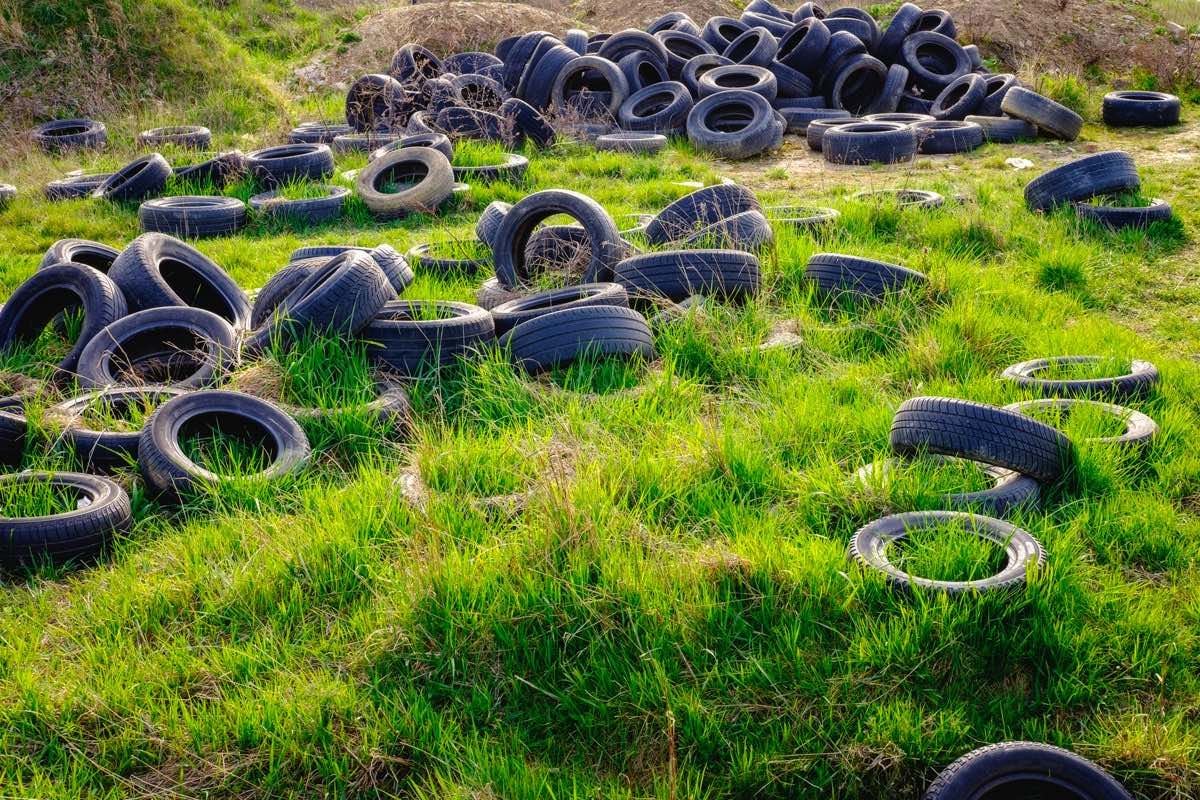
In the last few years, vehicle tires have emerged as a shockingly prolific producer of microplastics. It probably shouldn’t come as a surprise. Each year, roughly 3 billion new tires are made, consisting of synthetic rubber, which is a plastic polymer, as well as natural rubber, metal, and other materials. And each year, about 800 million of them become
waste. As tires wear down—from contact with the road or the friction of the brakes—they shed chemical-laden particles, and those chemicals, it turns out, can find their way into crops.
Tire-derived microplastics are a growing source of plastic pollution and a target of the United Nations International Plastic Treaty negotiations. Further, concern is growing about the hundreds of chemicals, up to 15 percent of the weight of the tire, that are shed into the environment via tire microplastics. “It is the additives that are the toxic compounds,” says Thilo Hofmann, an environmental scientist at the University of Vienna.
While scientists agree that tire particles contribute significantly to microplastic emissions in the environment, the numbers are difficult to quantify. Recent studies have found tire particles made up to 30 percent of microplastics in Germany, roughly 54 percent in China, 61 to 79 percent in Sweden, and a whopping 94 percent in Switzerland.
Researchers have already demonstrated that some crops, including lettuce and fruits, can take up microplastics, possibly putting human health at risk. But a new study has shown for the first time that store-bought lettuce contains chemical tire additives. It is an unexpected
finding, according to study co-author Anya Sherman, a doctoral student working with Hofmann at the University of Vienna. Read the full story.
|
|
|
|
|
|
Can New York City Treat Its Food Scraps As More Than Trash?
|
BY DOUG BIEREND • July 15, 2024
|
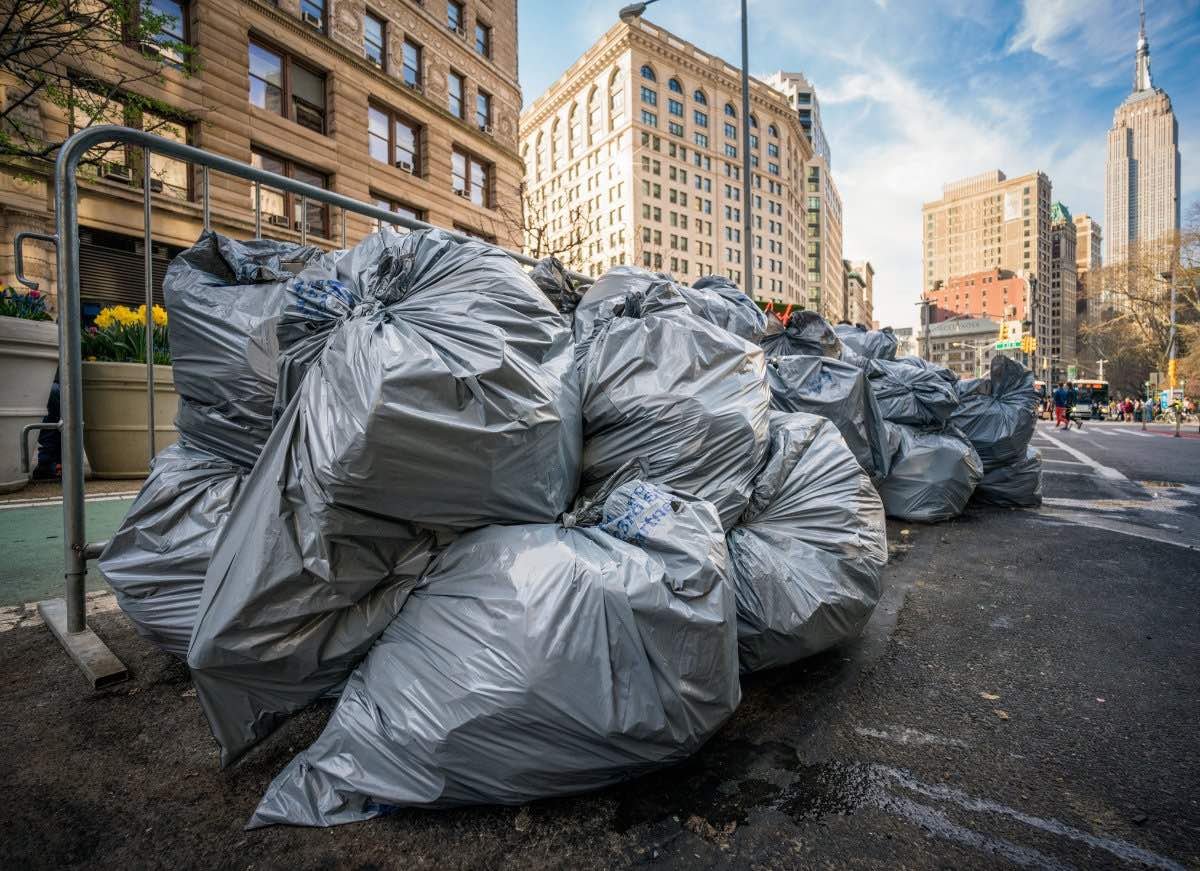
Community composting is a cherished part of many neighborhoods throughout New York City. But its future is unclear. In November of last year, under Mayor Eric Adams and his sanitation department’s new commissioner, Jessica Tisch, the NYC Compost Project was cut entirely from the city budget. So was a contract with the nonprofit GrowNYC, which operated dozens of food-scrap drop-off locations throughout the city, processing millions of pounds of scraps each year.
The cuts decimated community compost operations, costing dozens of jobs, closing down numerous processing locations, and curtailing educational programming. All to save around $7 million, a mere 0.006 percent of the city’s budget, or “less than a rounding error,” Manhattan Borough President Mark Levine said at a recent rally in front of New York City Hall.
After an immense pressure campaign by activists, members of the city council, and other elected representatives, funding was restored at the end of June. With the vote, the budget for community compost was placed under the New York City council instead of the city’s sanitation
department.
“I’m hoping that this will be less up for negotiation each budget season,” says Anna Sacks, legislative chair for the Manhattan Solid Waste Advisory Board and co-founder of NYC’s SaveOurCompost coalition. “There’s so much more that we could do, and it ends up by necessity concentrating our efforts on preserving what’s in existence, versus imagining a more expansive alternative future.” Read the full story.
|
|
|
|
|