View this email in your browser
|
|
The Deep DishAn insider look at food and farming from Civil Eats Issue 35, July 2025: A First Look at our Summer Reading List
|
|
|
|
|
The Editors’ Desk |
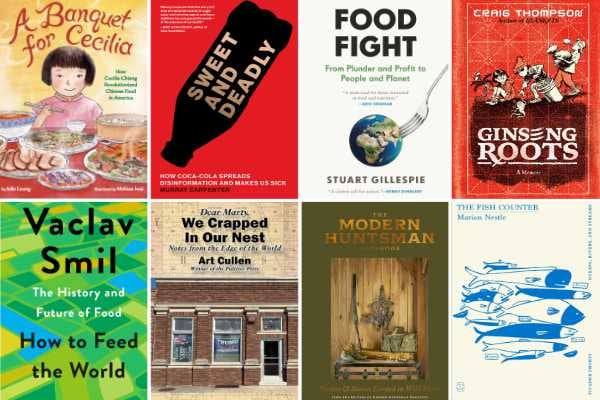
In this issue of The Deep Dish, we invite you to explore our food system from all angles, through books that offer personal journeys to those that take a high-level, multifaceted view.
You’ll find a seafood book that thoroughly explains the problems riddling our fish and shellfish supply chains, then tells us what to do about them; a rousing call to resist corporate power in the food system; a look at the destructive effects of one corporation in particular—Coca-Cola; a data-driven examination of solutions to hunger; and one man’s story of his small Iowa town as a microcosm of decline across America’s small farms.
We’ve added a provocative cookbook, too, by hunters and fishers, that urges us to connect to our nation’s wild places and preserve them while we still can. And we’ve included two illustrated books in the mix as well, a graphic memoir about the American ginseng industry in Wisconsin and an illustrated children’s book about the life of chef and restaurateur Cecilia Chiang.
Our final book, presented through an interview with its authors, celebrates honeybees—not only for the joy and sense of calm that tending hives brings, but also for what these amazing insects can teach us about navigating our fraught, splintered country.
And, as always, we’ve invited a member to share their story with us. This month, meet Michael Liang, who’s fulfilling his dream of starting an urban farm.
We hope you enjoy these recommendations and inspirations. Through your support, you’ve helped make this guide possible, as well as all our reporting about the U.S. food system and how it shapes our lives.
Thank you.
~The Civil Eats Editors
|
| Support Us Today
|
|
|
|
Member Updates |
Civil Eats Salon Recap: Inside the Food Policy Tracker
Last month, Paulina Velasco, collaborations project manager for the Institute for Nonprofit News (INN), talked with our editorial team for a behind-the-scenes look at how we find and track policy actions in D.C. If you weren’t able to attend (or you loved it so much you can’t wait to watch it again), you can read the summary and view the recording.
Connecting with Food and Farming Members and Changemakers in Oregon
|
|
|
On June 22, we held an in-person meetup with Civil Eats
members in Portland, Oregon. Editorial Director Margo True was in town for the Resilience and Resistance: Cross-Pollinating Food Movements conference and met with some knowledgeable, inquisitive Civil Eats members and conference attendees to hear about what’s working in their local food systems.
|
|
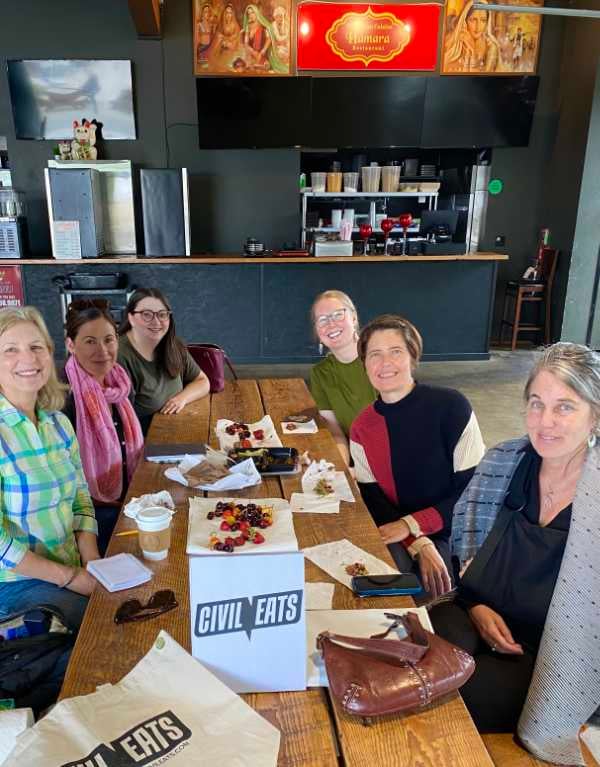 |
Photo courtesy of Jacquelyn Bouliba-Soule
|
|
|
We'll continue to hold in-person meetups; to help us learn more about where you’re located, please fill out this very short survey!
|
|
Have You Seen Our New Members Hub?
We recently launched our Members Hub. If you’re looking for past issues of our Deep Dish member newsletters, Salon recordings, instructions on joining the Members Slack community, and more, visit the Members Hub page after logging in as a member anywhere on our website.
What’s Happening in the Members Slack Community
Our Slack channel allows food-system changemakers, policymakers, and practitioners to exchange knowledge and get to know one another. Our team also shares updates about their work inside and outside our virtual newsroom. Last month, that included stories about crabbing and keeping bees, and and a about the James Beard Awards in Chicago (we took home the Health and Wellness Award).
|
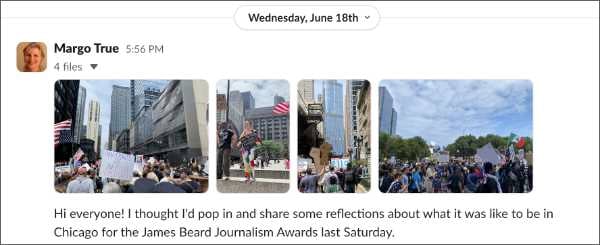 |
Join the Slack community to check out the rest of Margo’s post, hear more behind-the-scenes coverage, share resources, and chat with other Civil Eats members! Please review these Community Rules and Agreements and accept this invitation link, good through July 22. (Here are the instructions if you’re using it for the first time.)
Summer Break for the Civil Eats Team
Every August, we close our office to give our team some time to relax. This year, we will be taking a break from August 4 - 8. As a tiny, remote, independent nonprofit newsroom, we have a lot to accomplish and we can only do so if our team thrives long-term. When we’re on break, you can still keep up to date on our reporting, and you can always check our Membership FAQ page if you need assistance with your membership.
|
(Return to top)
|
|
|
|
Book Recommendations from the Civil Eats Team |
 |
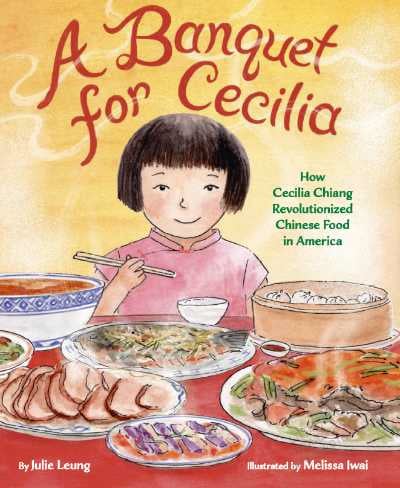
A Banquet for Cecilia: How Cecilia Chiang Revolutionized Chinese Food in America
|
By Julie Leung and Melissa Iwai
|
|
|
“Imagine you are little Cecilia Chiang, the
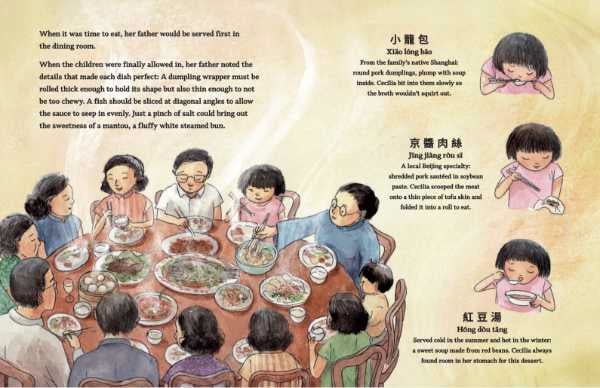
seventh daughter in a large and wealthy Chinese family,” begins this captivating children’s book about the restaurateur who transformed Chinese food in America. In a series of delicate and charming illustrations, we watch the blossoming of a gastronome: tiny Cecilia peering into the family kitchen, entranced by the sizzling of hot woks and the smells of fried garlic, tangy vinegar, and soy sauce—and, moments later, nibbling a soup dumpling with rapt concentration.
|
|
|
In just a few dozen pages, author Julie Leung and illustrator Melissa Iwai take us through the events of Chiang’s dramatic life. They show her fleeing Beijing in 1943 as the Japanese invaded,
walking 700 miles west with her sister to Chongqing (and discovering regional foods along the way); escaping the Chinese Civil War to live in Tokyo, where she started her first restaurant; and moving to San Francisco, where she opened her life’s triumph, The Mandarin.
|
|
At a time when Chinese food in the United States mostly meant cheap, forgettable chop suey, Chiang introduced a dazzling menu of authentic regional Chinese dishes from her childhood, like twice-cooked pork, beggar’s chicken, and tea-smoked duck—many vividly described and pictured in this book’s pages.
Cecilia Chiang died five years ago, at age 100, and her life has been well documented in the press and in her own memoirs. A Banquet for Cecilia finds a new, surprisingly intimate way to tell her story. It is also a powerful, joyful reminder—especially at this moment—of how immigrants enrich our country. —Margo True
|
|
|
|
|
|
|
|
|
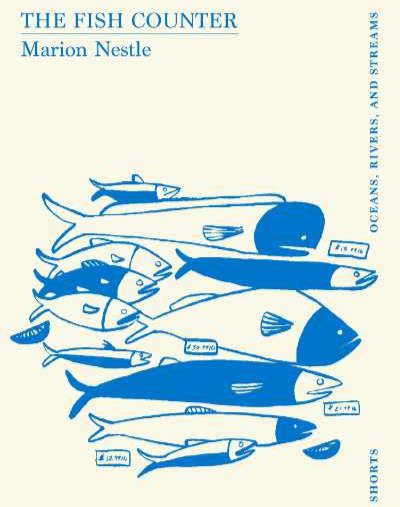
The Fish Counter
By Marion Nestle
|
|
|
Years ago, when I was working at a lifestyle magazine, I
helped put together a shopper’s guide to sustainable, healthful seafood. As we learned more about the dire state of our fisheries, we realized we were only skimming the surface of a labyrinthine topic.
|
|
|
So, when news came this year that the redoubtable Marion Nestle, our country’s leading nutritionist (and a Civil Eats advisor), was releasing a short book on how to shop for seafood, I was delighted—and then,
as I dove into the book, also unsettled by the true scope of the problem.
Nestle is known for the depth of her research and for not mincing words. Within the first few pages of The Fish Counter—a standalone excerpt from her revised edition of What to Eat Now, coming this fall—she states: “To make intelligent choices of fish at supermarkets, you have to know more than you could possibly imagine about nutrition, fish toxicology, and the life cycle and ecology of
fish—the kind of fish it is, what it eats, where it was caught, and whether it was farmed or wild.”
Nestle then plunges us into those chilly waters, showing us the full extent of our seafood troubles in methodical detail, layering in history, science, and, especially, politics. Lack of political will prevents us from grasping many of these problems, she reveals. Seafood industry lobbyists exert influence on the dietary guidelines, for instance, and neither our government nor the fish industry are willing to confront the main source of methylmercury in our seafood: coal-burning power plants.
So, what are we seafood lovers to do? This book deters us from buying most fish, but spurs us to fight for them. In the end, Nestle says, our best path is to educate ourselves and then take action. Tell our congressional representatives what we think. Join a fish advocacy group and work collectively for change. “Like so many other food issues,” she says,
“safe and sustainable fisheries demand democracy in action.” —Margo True
|
|
|
|
|
|
|
|
|
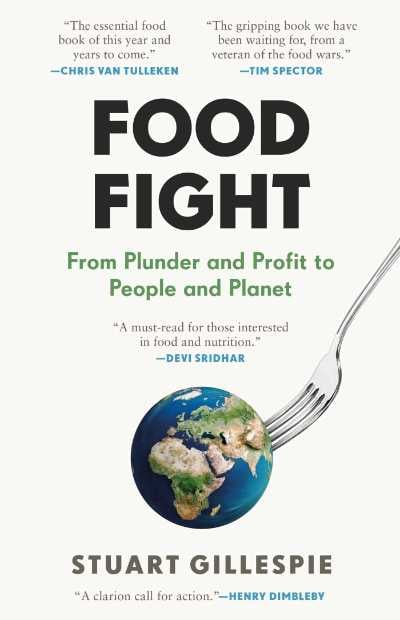
Food Fight: From Plunder and Profit to People and Planet
By Stuart Gillespie
|
|
|
Our global food system was originally designed to prevent
famine by mass-producing cheap calories, but it is now a driving force of worldwide obesity and undernutrition, as well as the climate crisis. For 40 years, health and nutrition expert Stuart Gillespie has been fighting to transform the system through his work with the United Nations and the International Food Policy Research Institute.
|
|
|
In his new book, he
unpacks how our current food system is working against us—to the benefit of billion-dollar corporations.
In examining the global malnutrition crisis, Gillespie describes how colonialism, the Cold War, and corporate capitalism shaped the food system to prioritize cheap, uniform food with little nutritional value, leading to undernutrition and obesity. He dissects how political, economic, and social structures perpetuate the conditions of malnutrition and exposes how transnational corporations profit off keeping people sick.
These corporations prey on vulnerable, marginalized groups, he explains, and they interfere with policies and research that bolster positive change—all while investing in remedies for the ill effects of their own products. For example, he writes, Nestlé sells multivitamins to be taken after bariatric surgery for obesity, and several “Big Food” corporations, such as Kraft Heinz, also own diet companies.
Though dense at times, the book thoughtfully weaves in case studies that Gillespie has both researched and witnessed firsthand, making for a riveting and eye-opening read. Taking lessons from successful and failed public-health policy interventions throughout history, Gillespie lays out a playbook to challenge the power of “Big Food.”
He calls on governments to create policies that reduce corporate control; on researchers to keep studying nutrition without corporate influence; and on individuals to pressure their governments to act. In doing so, Gillespie seeks to radically transform the power dynamics of the food system so we can live in a more equitable and nutritious world. —Riley Ramirez
|
|
|
|
|
|
|
|
|
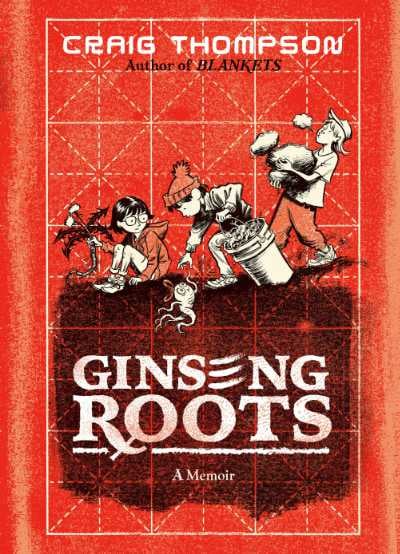
Ginseng Roots: A Memoir
By Craig Thompson
|
|
|
In the 1980s, farmers in the tiny community of Marathon,
Wisconsin, cultivated the most American ginseng in the world, which they sold primarily to the Chinese market for medicinal purposes. For 10 summers of his childhood, Craig Thompson worked in the Marathon ginseng fields. He used the dollar per hour he earned to purchase comic books, which fueled his love of drawing and eventual career as a graphic novelist.
|
|
|
In Ginseng Roots, a
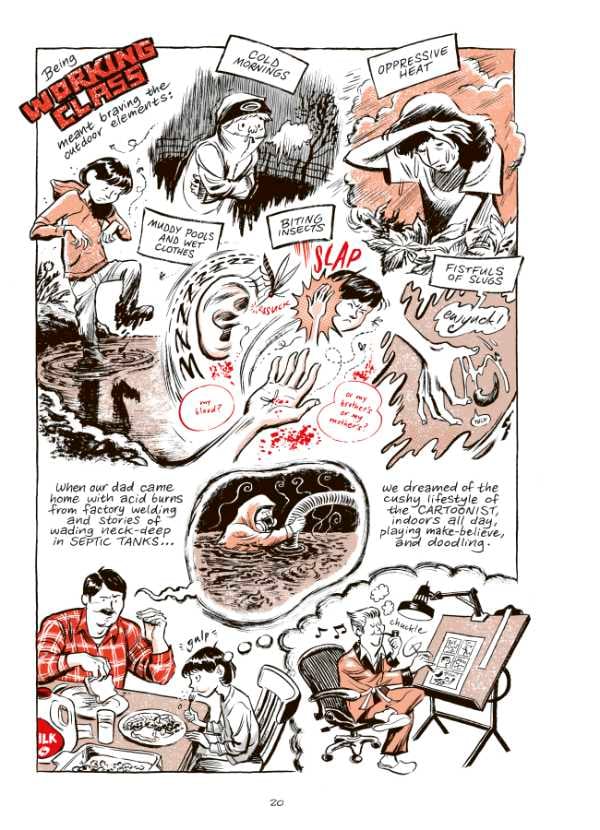
reported memoir in graphic novel form, Thompson examines the medicinal plant that shaped his early life. He shares both the 300-year history of ginseng and his own relationship with the plant, which is tied up with his experience growing up working-class in the rural Midwest. He revisits the farmers who once employed him, tells the story of a Hmong boy who worked in the fields alongside him, interviews big-shot growers at the Wisconsin Ginseng Festival, and even journeys to Taiwan, China, and South Korea to examine the central role of the plant in those cultures.
|
|
In tones of black, gray, and red, Thompson’s exquisitely drawn book is a visual masterpiece that tells a sweeping story of globalization, industrial agriculture, immigration, labor, class, and religion—all through the lens of the strange, humanoid ginseng root. Thompson also weaves in his experiences reporting the story, as he manages a painful health condition, navigates the aging of his evangelical parents, considers his relationship with his siblings, and ponders place and the meaning of home. In all, Ginseng Roots is personal, educational, and very much worth a read. —Christina Cooke
|
|
|
|
|
|
|
|
|
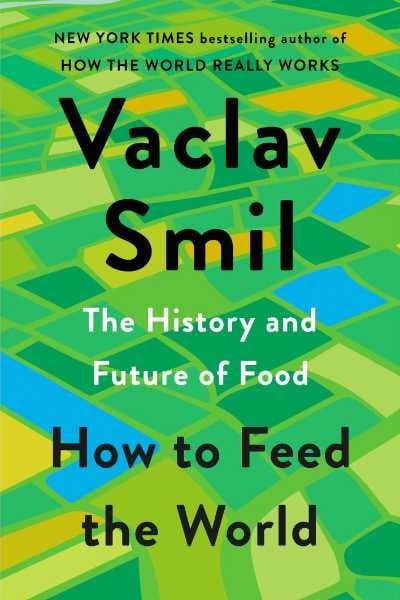
How to Feed the World: The History and Future of Food
By Vaclav Smil
|
|
|
I am not much of a data person, but I am a big fan of big
ideas to solve big problems. So the title alone drew me to Vaclav Smil’s latest book. A professor emeritus at the University of Manitoba, Smil has built his body of work around data-driven research and analysis that tackles big questions; his 2022 book How the World Really Works earned high praise from Bill Gates and others.
|
|
|
In How to Feed the
World, Smil begins with an exhaustive exploration of how we got here—including why we eat certain plants and animals and not others, and why the global food system doesn’t get the same economic and policy support as, say, technology supply chains. If you like data, this will likely interest you.
Smil lays out solutions at a very high level. He names many that we have covered for years: Reduce food waste, eat less beef, eat meat that is more humanely and sustainably produced, and support more efficient and productive agriculture in China and especially Africa. He also debunks what he sees as false or non-scalable solutions: organic farming, perennial crops, GMOs, and lab-grown meat.
But in explaining what would work, we’re left with only the broadest strokes of suggestions. “All countries need to minimize wholesale [food] storage and distribution losses,” is one prescription for reducing food waste, for instance. And climate change gets very little mention, which strikes me as potentially upending any dataset Smil is working with. In the end, Smil has given readers a bunch of data and a few suggestions as to what to do next, but the book falls far short of truly helping feed a world with 2 billion more people and a rapidly destabilizing climate. —Matthew Wheeland
|
|
|
|
|
|
|
|
|
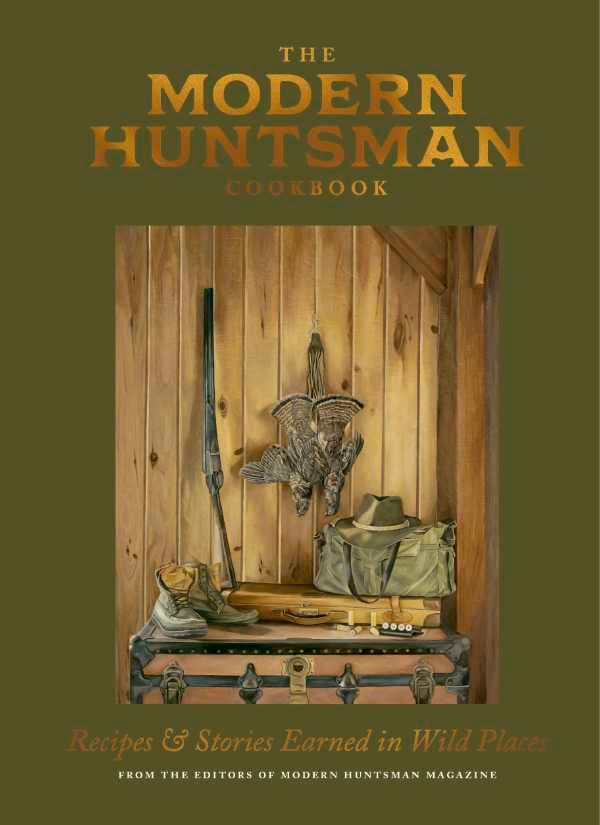
The Modern Huntsman Cookbook: Recipes and Stories Earned in Wild Places
From the Editors of Modern Huntsman Magazine
|
|
|
In December 1960, the writer Wallace Stegner penned an
argument for wilderness, to help bolster desperate preservation efforts then underway. Stegner argued that the idea of wilderness itself had immeasurable value. “We simply need that wild country available to us,” he wrote, “even if we never do more than drive to its edge and look in.”
|
|
|
In its own subtle way, The
Modern Huntsman Cookbook: Recipes and Stories Earned in Wild Places, makes a similar argument. Amid its recipes for wild boar ragú, glazed deer loin, and surf clam ceviche, offered by an assortment of hunters, fishers, and outdoor chefs, the book offers insightful essays, including from the naturalist Rick Bass. Each contributor argues for a way of life that would be (sadly) unsustainable for an entire modern society to undertake, even while its continuation feels somehow essential.
The editors have sought here to elevate hunting into something beyond abstraction—to connect it to culinary art. Here you’ll find meticulous guidance on building a fire, on choosing cooking equipment for flame and ember, and recipes that seek to deeply connect us to our food. Anyone with access to wild food will appreciate the recipes, accompanying essays, and rich, illustrative photography. Just as we need the idea of the wild available to us, we need the idea of the hunt, too—and, through books like this, a way to approach the edge and look in. —Brian Calvert
|
|
|
|
|
|
|
|
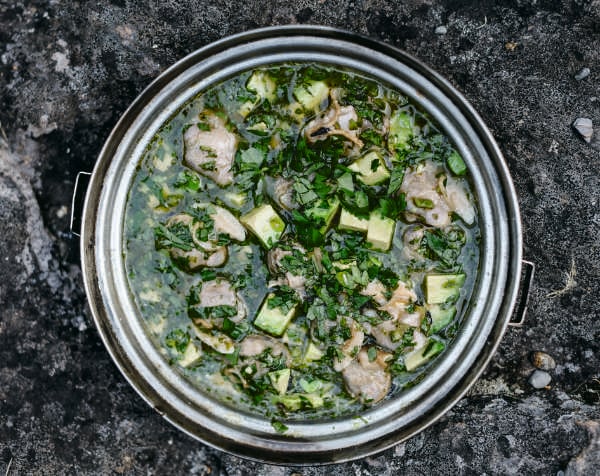 |
Surf Clam Ceviche |
From The Modern Huntsman Cookbook
Recipe by Jon Levitt
|
Serves: 4 | Prep time: 10 minutes | Cook time: 10 minutes
|
It is easy to round up ingredients in Maine. There are good farms and markets—especially along the coast, even in the middle of nowhere—on islands and at the tips of long peninsulas. Typically, I bring enough food for the whole trip, but it’s nice to know that I can resupply along the way. Wild foods are abundant. Some have longer seasons than others. Clams and sea urchins are easy, and they can be found at low tide all year round, but they are particularly good in cooler months—razor clams, soft-shell clams, surf clams, quahogs. This cold and refreshing clam dish is a perfect snack before dinner.
Ingredients
|
• 3 pounds surf clams or large quahogs
• 2 tablespoons fresh lime juice
• 1 tablespoon extra-virgin olive oil
• 1 jalapeño chile, finely chopped
• 1 cup fresh cilantro, finely chopped
• Saltine crackers or tortilla chips, for serving
|
Method
Steam the clams until they just open, with the meat still raw. Do
not oversteam. Let cool.
Remove the clams from the shells and separate the meat from the
innards. Chop the clam meat.
In a bowl, toss the chopped clams with lime juice, olive oil, jalapeño,
and cilantro. Refrigerate for 30 minutes. Serve with the saltines or
tortilla chips.
|
|
|
|
|
|
|
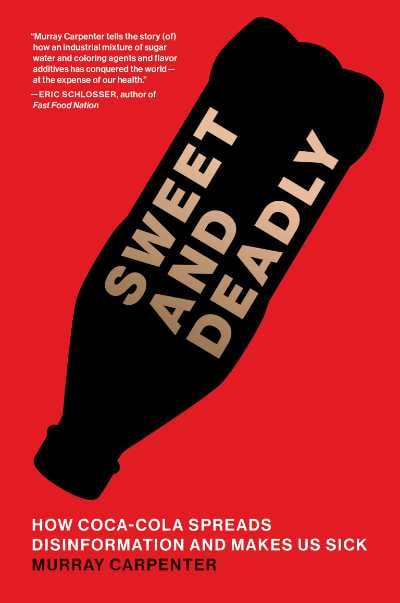
Sweet and Deadly: How Coca-Cola Spreads Disinformation and Makes Us Sick
By Murray Carpenter
|
|
|
I grew up in a family of Coca-Cola drinkers. One of my
brothers drank a couple of 2-liter bottles every day for years, and I couldn't help but suspect that his stomach problems were related to his soda habit. That curiosity led me to Sweet and Deadly.
It's a fascinating book that makes two main arguments: that Coca-Cola is a significant contributor to chronic disease and that the company uses its well-oiled disinformation machine to obscure the soda’s health risks.
|
|
|
Author Murray Carpenter traces how the sugar industry's early PR efforts to influence nutrition policy and public opinion laid the groundwork for a PR playbook adopted by the tobacco industry and Coca-Cola: sow
doubt, fund front groups that defend its interests, hire "experts" to back up its claims, and spend lavishly to defeat legislation like soda taxes. Unlike Big Tobacco, Coca-Cola has been winning the PR war for years, dating back to 1911, when the company successfully defended itself in court against charges that the drink was addictive and marketed to kids.
Since then, soda consumption has skyrocketed while public health has declined. Researchers have associated regular consumption of sugar-sweetened beverages with elevated (cardiovascular disease) mortality, among other health impacts. Today, unhealthy Americans outnumber healthy ones, with two-thirds being obese or overweight. Coca-Cola isn’t entirely to blame for all of this, of course, but it is undoubtedly a fixture in our unhealthy American diet. As for my family, I am relieved that they have scaled back their soda consumption, even if, every once in a while, they still can't resist reaching for a bottle of Coke. —Tilde Herrera
|
|
|
|
|
|
|
|
|
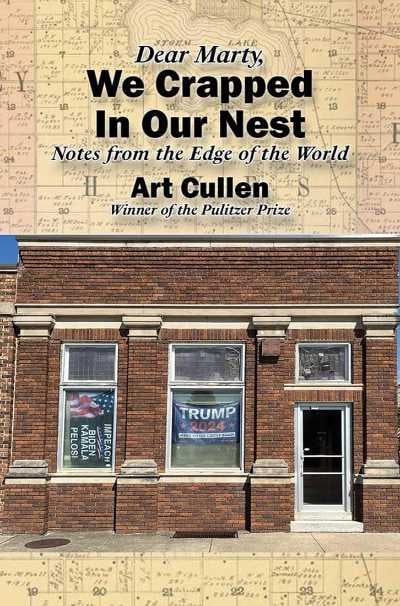
We Crapped In Our Nest: Notes From the Edge of the World
By Art Cullen
|
|
|
It’s easy to forget that as recently as 30 years ago,
supporting the expansion of the industrial animal farms that now dominate certain sectors of Iowa’s farmland grid was not a winning political position. Art Cullen remembers. In fact, the Pulitzer Prize-winning publisher of Iowa’s Storm Lake Times Pilot traces Iowa’s transformation back much further.
|
|
|
He recalls a time of seed saving, when a small farm could feed a family; recounts legendary environmentalist Aldo Leopold foreshadowing the consequences of the Green Revolution-based shift toward farm efficiencies;
and progresses to an entire state’s river system befouled by manure.
We Crapped In Our Nest: Notes from the Edge of the World explores those themes in what reads like a series of letters Cullen is writing to his old friend Marty. Through personal reflections, tangents, and the steady (and sometimes meandering) unspooling of arguments, he paints a picture of what happens when domination—over animals, fertile landscapes, Native people, and the immigrant workers who feed us—drives agricultural and community development.
The book invites readers to see the decline of their towns and landscapes not through the distorted lens of the politicians who court them for votes and profit, but by looking squarely at and connecting true threats: corporate consolidation, the exploitation of working people, and a climate warming fast enough to end it all. “We are left with little choice but to change before we burn ourselves up,” he writes. Surprisingly, from his little corner of Northwest Iowa, he still sees a path toward making that happen. —Lisa Held
|
|
|
|
|
|
|
|
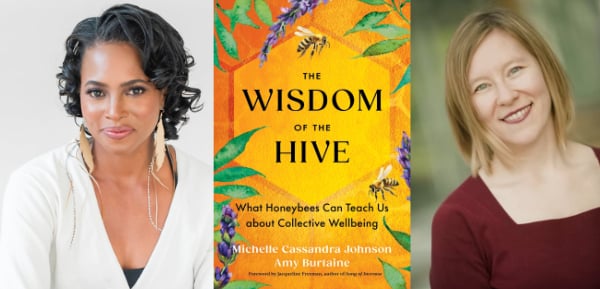 |
Michelle Cassandra Johnson and Amy Burtaine.
|
The Check-In: What Bees Can Teach Us About Well-being and Survival
|
BY ELENA VALERIOTE
|
About 35 percent of the world’s food crops are dependent on pollinators, which means that we have them to thank for about one in every three bites of food that we eat. Whether or not you welcome the presence of bees at your picnic or party, there’s no denying our tables would be poorly set without them.
Michelle Cassandra Johnson and Amy Burtaine, co-authors of The Wisdom of the Hive, understand this about bees—and much, much more. Johnson began keeping bees at her home in North Carolina in 2019, prompted by a vivid dream about them at a time when her mother was gravely ill. Still half dreaming, she got online and ordered "everything that one needs to tend bees—the suit, the boxes, the bees, everything," she says.
Soon afterward, she learned that in many cultures, bees are thought to help people through times of grief or uncertainty. "This is when I began to understand their mystical power," she writes in the book. (Her mother eventually recovered.) "And when the shipment of bees arrived, I began to realize the very practical magic they embody."
Burtaine started keeping bees a year later at her home off the coast of Washington state. Though she still does not feel like a master beekeeper, she’s had great teachers—millions of them. “I am always learning from the bees,” she says.
|
The two longtime friends, who both work as equity educators, experienced the joys and heartbreaks of beekeeping in their respective backyards—from the sweet taste of a hive’s first honey harvest to the silence of a colony lost to a bitter cold winter day.
Then, one day, Johnson called Burtaine and invited her to a shamanism workshop about the principles of the sacred feminine and bees. Burtaine recalls, "At the end of it, we turned to each other with so much excitement. It felt like everything that bees do is a metaphor for humans, which could be a lesson to us.”
That excitement sparked a creative collaboration that eventually took form as their new book, in which the
authors invite us to reflect on the myriad complex relationships between humans, bees, and the planet we all share. They encourage us to reimagine the relationship between humans and bees as one defined not only by what the bees can provide us tangibly in the form of honey, but also by the life lessons they can offer if we really pay attention. And, as bee populations the world over have plummeted, resulting in resounding chants of “Save the bees!” Johnson and Burtaine ask instead: “What if the bees are here to save us?”
Civil Eats recently spoke with the authors about bees and what they can teach us about the attunement, caretaking, and interconnectedness that are vital to their survival—and, the authors believe, to ours.
What are some of the ways that we all live in relationship with bees, even if we don’t tend beehives?
Burtaine: Michelle and I did not write this book only for beekeepers. We wrote it as a love letter to bees and as a love letter to humanity. We see how bees treat one another and care for the hive as a superorganism in ways that we wish human beings modeled.
Our mission with the book is to help people become students of bees, like we are. Even if you’re not a bee-tender, you’re a food eater—and there’s food injustice across the planet because of systems of oppression. We have things out of balance as humans because of our hierarchies, with us at the top, even though we couldn’t survive without pollinators.
There are also incredible statistics—something like two million flowers go into a pound of honey. It’s just one example of how bees work. Even if they won’t be able to benefit from or taste the fruits of their labor, bees are constantly laboring for future generations, and for us.
Johnson: I think we have forgotten who we are to each other and how to be in reciprocal relationship with the more-than-human world, which is making us suffer. Most of what we ingest is in some way touched by the honeybees, which should call us into a deeper relationship with them.
|
“What does it mean for us as humans to labor in a way that will support future generations, even if we won’t experience that ourselves? To me, that kind of laboring is a condition that needs to be in place for us to create justice.”
|
It makes me think about the life cycle of most bees, which is about six to eight weeks, with the exception of the queen. Throughout that cycle, they’re moving through different roles within the hive. Their final stage is being a forager, where they go out and gather resources, like pollen and nectar and water, for the hive. Often, they will not benefit from those resources directly, because they’re going to die soon.
So, a question we ask is: What does it mean for us as humans to labor in a way that will support future generations, even if we won’t experience that ourselves? To me, that kind of laboring is a condition that needs to be in place for us to create justice.
What are some of the surprising things you’ve learned about how bees interact with each other? What can they teach us about community?
Johnson: As a superorganism, bees do not think of themselves as individual bees—they think of themselves as an extension of the hive. Everything they do is for the hive. They also work with the ecosystem. They understand seasons and weather systems—they know if it’s going to storm well before we do. They work with the sun and light. They work with the things that are blossoming outside their hive. Bees have to understand all that to survive. What if we understood and were aligned in that way with the larger ecosystem?
Bees are also an indicator species—how well bees are doing is an indication of how well we are doing.
Burtaine: Bees attune to one another. Their vibration tells you how they are doing. When they are agitated, their vibration is higher. When they are calm, their vibration is lower. They work well together, whether under stress or not.
We as humans tend to fall apart under stress. We are not resonating with ourselves. We are not resonating with one another or doing what is best to help those right next to us. We are not tuning into the whole. We in the West are from a “save mine, get mine, hoard mine, figure out mine” culture that is antithetical to what the bees do. The bees could never do anything for individual gain.
How do you think bees should inform our response to the present moment, to what’s happening in politics and social systems?
Burtaine: So much of what bees do is in the dark [of their hive], but as human beings, we tend to fear the dark. It’s the land of our nightmares, myths, and legends; it’s full of monsters or the wild beasts that would eat us in the days before electricity.
There’s a beautiful writer, Francis Weller, who does a lot of grief work and talks about the period we’re in being “the long dark.” We’re in a time of great uncertainty, and it’s scary. What if we were to—as the bees do—huddle together in the dark, instead of just figuring out “how do I survive?” or “what do I need?” What if we embraced the unknown? What if we sit more kindly with ourselves and one another in the unknowing to create new visions, new ideas, new possibilities?
I think we’re at a time on the planet where we have to learn by doing. We cannot wait until we’re ready with things figured out. We’re not going to just get it right. We’re going to move messily through it together.
|
“We’re in a time of great uncertainty, and it’s scary. What if we were to—as the bees do—huddle together in the dark, instead of just figuring out ‘how do I survive?’ or ‘what do I need?’ What if we embraced the unknown? I think we’re at a time on the planet where we have to learn by doing.”
|
Johnson: One way we can learn to adapt to mirror the ways of the bee is to attune to our internal and external landscapes. People right now are dysregulated, distracted, and overwhelmed, so it’s very hard to show up moment after moment.
The bees tend to one another, and they tend to the hive. That laboring and care and attunement feel like skills and tools that people in our ancestral lineages understood, because they were more connected to natural rhythms and engaged in ceremony related to seasonal shifts. They were more closely aligned to agriculture in the sense of “what’s growing now?” not “what do I want to eat right now?”
It’s going to require us to understand that things are urgent, and also that a response to this urgency is us slowing down enough to understand what is happening. The bees model that all the time. They’re aware of everything that is happening within and outside the hive, and they’re communicating about it through their antennae, vibrations, and movements.
How can folks become more attuned to bees and begin to learn for themselves what bees have to teach us?
Johnson: A practical thing people can do is plant a pollinator garden or support a community garden. That practice of gardening with one another generates a sense of hive mind.
Burtaine: Honey tasting is a practice we suggest, as long as folks aren’t allergic. Sit with the incredible complexity that unfolds when you really taste it. There are stories in honey.
Johnson: There are hints of multiple plants and places [in honey]. It can be a beautiful meditative practice to both nourish your body and be really present to the complexity and sweetness of what the bees offer.
What are some things we can all do now to better care for the bees, ourselves, and those around us?
Burtaine: There are very practical things we can do. If you have the means, support local, organic farmers and beekeepers. Don’t use pesticides. Try humming—it’s a powerful nervous system settling practice that you can do by yourself. You can also put on a YouTube video to listen to the bees and hum along with them, or try a humming practice or attunement meditation.
This interview has been edited for length and clarity.
|
|
|
|
|
|
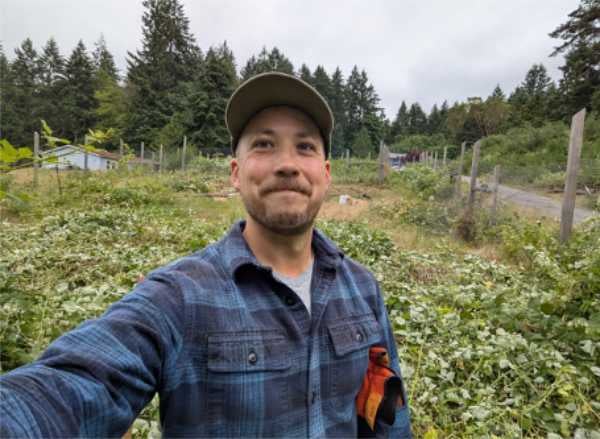 |
Photo courtesy of Michael Liang
|
Member Profile: Michael Liang Is Living His Farming Dream |
BY JIM COLGAN
|
It’s rare to land one’s dream job, but Michael Liang felt like he did just that. In high school, he wanted to be a graphic designer at an environmental organization. Shortly after he graduated from the University of Michigan in 2008 with an art degree, he got a full-time job designing posters and websites for the National Park Service, where he worked for the next 10 years.
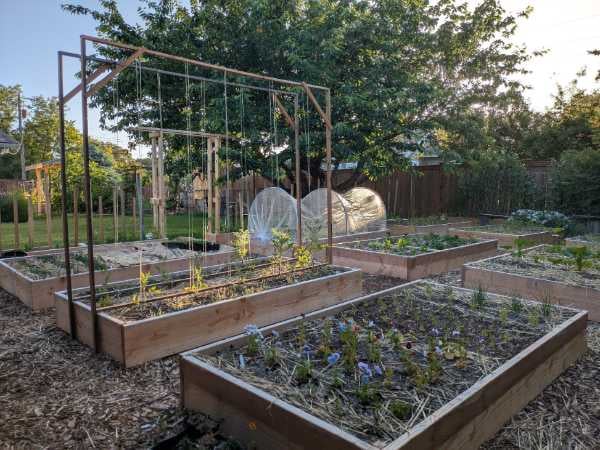
Now Liang has another version of his dream: running a small farm in his backyard while developing an urban agriculture plan for the city of Tacoma, Washington.
“Designing a farm, growing plants, is like this living sculpture,” Liang says. “And having a business is another form of self-expression.”
Liang grew up in a Detroit suburb, and although he was drawn to gardening, farming didn’t seem like a viable career choice. “People probably would've looked down on that had I voiced it as an interest,” he says.
He spent his grade-school summers volunteering at an environmental day camp in Northern Michigan, where his uncle was a park ranger. “I was basically following scientists around and playing in the mud,” he happily recalls. In college, he interned at national parks in the Northern Cascades—and there landed his first job, which developed into a career that took him from Philadelphia to Southern California.
Liang returned to the Pacific Northwest to take a leadership role at a nonprofit in Tacoma called Spaceworks, which helps artists become successful entrepreneurs. Around the same time, he took on volunteer roles at multiple nonprofits, including as board president of the Tacoma farmers’ market. He also served a brief stint as a commissioner for the Tacoma parks district.
He said yes to so many things, he says, that it quickly led to burnout. So he finally started saying no, and quit his full-time work.
“That's where the farm dream that had been on the back burner for many years finally bubbled to the surface,” he says.
|
 |
|
Liang started Happy Kitchen Farm in January of this year, launching a CSA for micro greens and culinary herbs as well as a weekly farm stand. He sells to the general public, but is most excited by the interest he’s getting from chefs, especially those who, like him, are underrepresented in farming and
small business (Liang is biracial and identifies as queer). He plans to expand the farm to a quarter acre next year, and aspires to grow well beyond that.
For now, though, Liang wants the farm business to grow at a sustainable pace, so he doesn’t risk burning out again. The work itself guides the rhythm of his days, which suits him. “So much of farming is humbling me and teaching me to slow down,” he says.
|
(Return to top)
|
|
|
|
|
|
|
That's all for this issue of The Deep Dish. Thank you for reading, and thank you for being a member of the Civil Eats community. If this is your first time reading The Deep Dish (welcome!), be sure to check out our previous issues:
If someone forwarded this email to you, please support our work and become a member today. Questions? Compliments? Suggestions? We love to hear from our members: Please send us a note at members@civileats.com
.
(Return to top)
|
|
|
|
|
|
|
|
|