|
|
The Editors’ Desk |
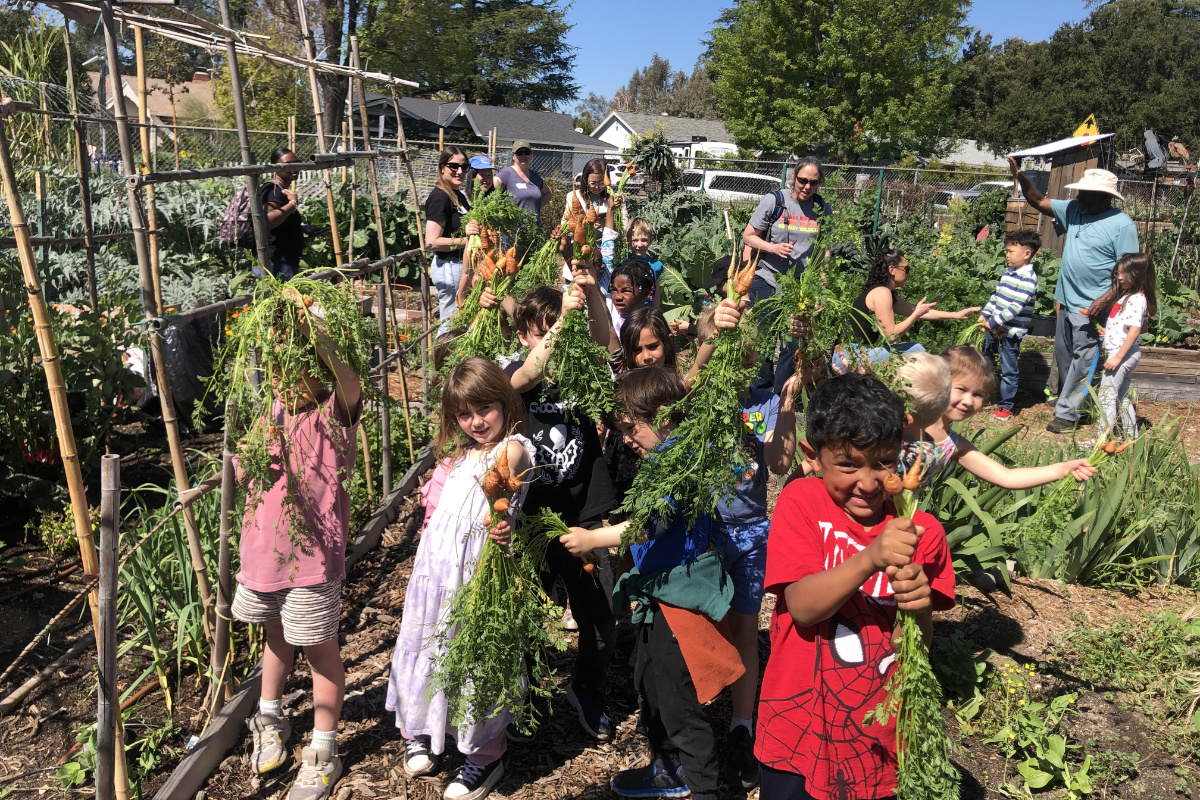 |
A school tour of the Altadena Community Garden, Los Angeles, March 2024.
(Photo courtesy of Altadena Community Garden)
|
In the thick of harvest season, we’re devoting this issue to community gardens—collaborative, communal efforts, where people grow food for themselves and their neighbors. Now, as federal funding reductions for food programs, changes to the Supplemental Nutrition Assistance Program (SNAP), and tariffs all seem likely to make food access more difficult for many, we look at these resourceful collectives for the solutions they offer—and the joy they bring.
In Los Angeles, we visit the historic Altadena Community Garden, severely damaged by the Eaton Fire earlier this year, as its members painstakingly restore what had been an edible paradise for the town. In New York City, we celebrate the 30th anniversary of the New York Restoration Project with a photo essay on gardens the project has revived.
We head to Denver to report on the city's community food forests—a way of gardening that yields multiple ecological benefits as it pumps out food—and the visionary group that keeps them going, despite the recent loss of federal funding.
We also dig into exactly what it takes to start and successfully grow your own community garden, including finding the right site, how to work together, and establishing funding. And we wrap things up with three profiles of Civil Eats member gardens that are clearly a boon to their communities. (We’ll be featuring more member gardens in our Slack channel.)
Our reporting confirmed that growing food together often leads to other, deeper connections. We saw communities gathering to plant
and harvest, but also to eat together, celebrate, relax, and give back to one another with fresh food, mutual support, and resilience.
As always, thank you for reading, and for being part of our own community at Civil Eats—our shared garden of ideas, you could say. Please invite your friends and colleagues to join as supporters of our growing work.
~ The Civil Eats Editors
|
| Donate Today
|
|
|
|
Member Updates |
Join the Civil Eats Book Club!
|
Our virtual book club series is in full swing. On Thursday, September 25 at 1 p.m. PT/4 p.m. ET, we'll explore Change the Recipe: Because You Can't Build a Better World Without Breaking Some Eggs by José Andrés, founder of World Central Kitchen (WCK), and author Richard Wolffe. Robert Egger,
a founding board member of WCK, will join us.<> Sign up here for the Zoom call.
Next, we’ll discuss The Salt Stones: Seasons of a Shepherd’s Life by Helen Whybrow on Wednesday, October 22 at 1 p.m. PT/4 p.m. ET. To join us, purchase your copy and sign up here for the Zoom call. We’ll
explore themes from the book, share our insights, and offer some questions for the group to consider.
|
| Register now
|
For the final book club in this series, we’ll be discussing Ginseng Roots: A Memoir by Craig Thompson on Thursday, November 20, at 1 p.m. PT/4 p.m. ET. Register here to join the call. (Dates and author availability are subject to change.)
We hope you will join us in conversation (even if you haven't finished the book). Our book club is a great opportunity to meet other members of the Civil Eats team and supporters and discuss themes and topics from our book coverage.
|
Share Your Expertise at the Next Virtual Meetup
|
Our fun, lively meetups bring together people who work in food systems or are interested in them, and are a great way to make new and fruitful connections. Our next virtual meetup will be held on Wednesday November 12 at 1 p.m. PT/4 p.m. ET. The focus: Food Policy & Advocacy.
You’ll have an opportunity to ask questions and share resources on the topic. To make our time together valuable and so everyone has a chance to participate, we’re capping this call at 20 members. To encourage open, free-flowing dialogue, we won’t record the call.
|
| Register now
|
What’s Happening in the Members’ Slack Community
|
This Civil Eats Member Community is a virtual space where food-system changemakers, policymakers, and practitioners can exchange knowledge and get to know one another. Our team also posts updates on their work, so members are first to know what’s happening at Civil Eats.
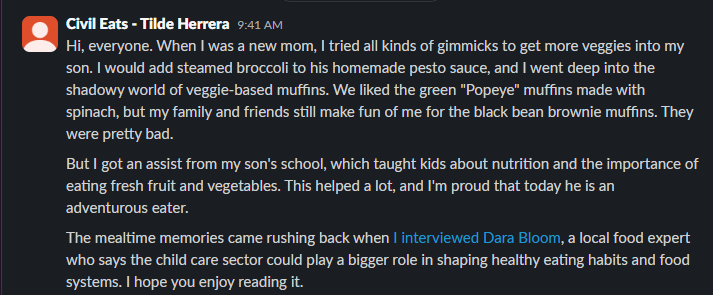
Associate Editor Tilde Herrera recently shared her connection to a story we recently published:
|
 |
Join the Member Slack community to check out posts from other members of our team, see behind-the-scenes coverage, share resources, and chat with other Civil Eats members! To join, please review these Community Rules and Agreements and accept this invitation link, which is good through September 30. (Here are the instructions if you’re using the site for the first time.)
|
(return to top)
|
|
|
|
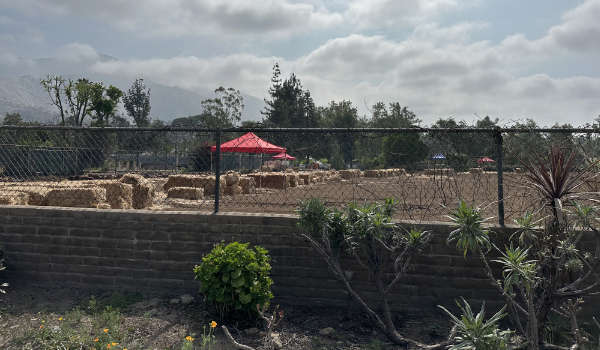 |
The Altadena Community Garden, in the process of remediation from toxins in the wake of the Eaton Fire. (Photo credit: Jennifer Oldham)
|
After the Eaton Fire, the Altadena Community Garden Rebuilds
|
BY JENNIFER OLDHAM
|
Five months after the second-most destructive fire in California’s history, gardeners in the hillside town of Altadena were hard at work remediating what had once been a community paradise.
An acrid smell floated on the breeze amid the calls and caws of mockingbirds, finches, and crows at the two-and-a-half-acre Altadena Community Garden, now an expanse of mostly empty soil.
Joe Nagy, a white baseball cap pulled low over his sunglasses, explained how gardeners hope oyster mushrooms will help bring the 52-year-old landmark back to life: by absorbing and clearing potential toxins from the soil.
“Some people might argue we didn’t really need to do all this, but the big picture is, we are right next to really toxic burn zones,” said Nagy, who is president of the nonprofit that operates the popular 120-member institution.
|
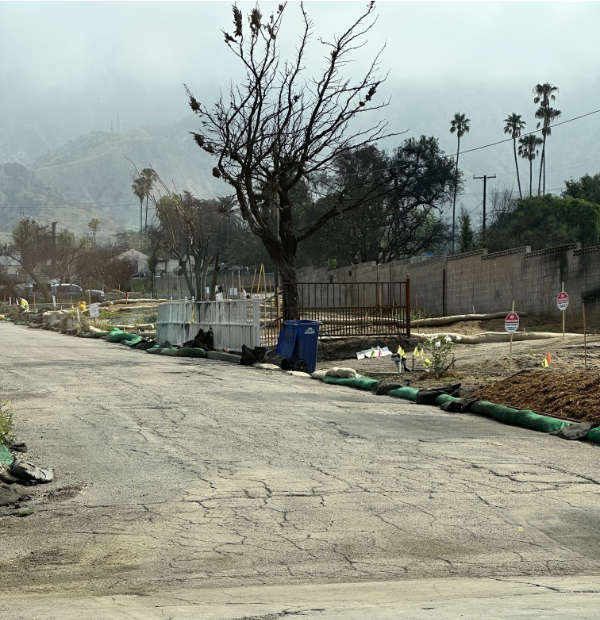 |
Homes lost around the Altadena Community Garden. (Photo credit: Jennifer Oldham)
|
|
|
In January, the Eaton Fire burned through this
northern Los Angeles suburb, destroying nearly 10,000 homes, businesses, and landmarks. The fire didn’t char the garden, but members worried that lead and other airborne pollutants had settled in the soil.
In the aftermath, Nagy and the community garden members have been left with a quandary: How would they remediate after such an unprecedented disaster? The decision was made more difficult by the fact that many of the garden’s 82 plots, and a trellis-shaded common area, remained unscathed; one even had cabbage ready for harvest.
In April, Nagy said, gardeners donned protective equipment and removed tools and other personal items from their plots. Workers hauled away raised beds, then scraped off more than 3 inches of topsoil. Next, trucks dumped 141 tons of compost on top. The nonprofit’s members added teas, fertilizer, and worms. Finally, in June, they amended the mixture with oyster mushroom mycelium and covered it with straw. The fragile compound required constant watering to keep it alive in the hot summer sun.
|
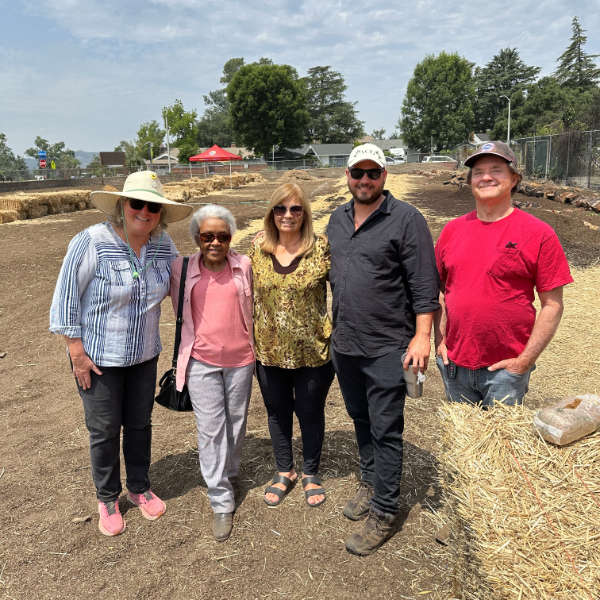 |
Altadena gardeners (from left): Mary McGilvray, vice president of the nonprofit that operates the garden; Ardra Grubbs, a garden member for 50 years; gardener Maria Zendejas crafts soap from wild calendula flowers bordering the garden; Joe Nagy, president of the garden's nonprofit; and Kurt Zubriskie, a member for nearly three years. (Photo credit: Jennifer Oldham)
|
|
It was a lot of work, requiring scores of hours of labor, a demonstration of the strong bonds among gardeners who find solace in this place. Many have tended this ground for decades, growing vegetables, herbs, and fruit year-round. They’ve shared recipes, seeds, and laughs here. One community gardener makes wine from Concord grapes that still crown a chain-link fence surrounding the garden. Another crafts soap out of calendula, a perennial daisy that
blooms along the perimeter.
The gardeners include African Americans, Cameroonians, Gabonese, El Salvadorans, Eastern Europeans, and Filipinos, among others. The city itself, established at the base of the San Gabriel Mountains, is home to generations of Black families, who comprise nearly two-thirds of the households within the Eaton Fire perimeter. More than half of the Altadena Community Garden’s members lost homes to the blaze.
For Mary McGilvray, vice president of the nonprofit that operates Altadena Community Garden, the remediation of the soil has given her a renewed sense of purpose upon her retirement. “This is one of the most beautiful places in the late afternoons when the sun hits those mountains,” she said. “One of the first times I was here by myself, those mountains were purple, and these Latino men were riding their horses in their full silver regalia down the street and into the park here—and there was a guy sitting here playing the banjo, and it was absolutely magical.”
‘One of the Hardest Things Human Beings Have to Do’
African Americans established the garden in the early 1970s when local homeowners, equestrians, tennis enthusiasts, and politicians agreed to convert the site of a former military academy into a leafy haven. With tennis courts and a horse arena nearby, Black residents cultivated a few small plots, and Los Angeles County installed water lines for their use.
The space, which is both gender and politically diverse, became so coveted that some members would drive for miles to weed and water their patch of ground. In July, even with remediation underway, the waiting list held 133 names. It can take as many as three years to receive a plot.
Many plots belong to two or more gardeners, who often step in to nurture each other’s fruits and vegetables when a partner goes on vacation, gets knee surgery, or is buried in work.
“Gardeners are doing one of the hardest things that human beings have to do: share land,” said Omar Brownson, executive director of the Los Angeles Community Garden Council, which counts about a third of the region’s 150 gardens as members. “Think about all the conflict around the world. Most of it is around sharing land.”
|
“Gardeners are doing one of the hardest things that human beings have to do: share land. Think about all the conflict around the world. Most of it is around sharing land.”
|
|
In Altadena, even residents who aren’t members of the community garden eagerly await its reopening, particularly its famed summer picnic. “I had a wonderful experience during the last picnic when we had the public in here,” recounted Kurt Zubriskie, who is considered a “new member,” having belonged for a mere three years. “I had a fair field of strawberries, there were some kids over there stealing strawberries, and it was just
wonderful—they were so happy and joyous.”
|
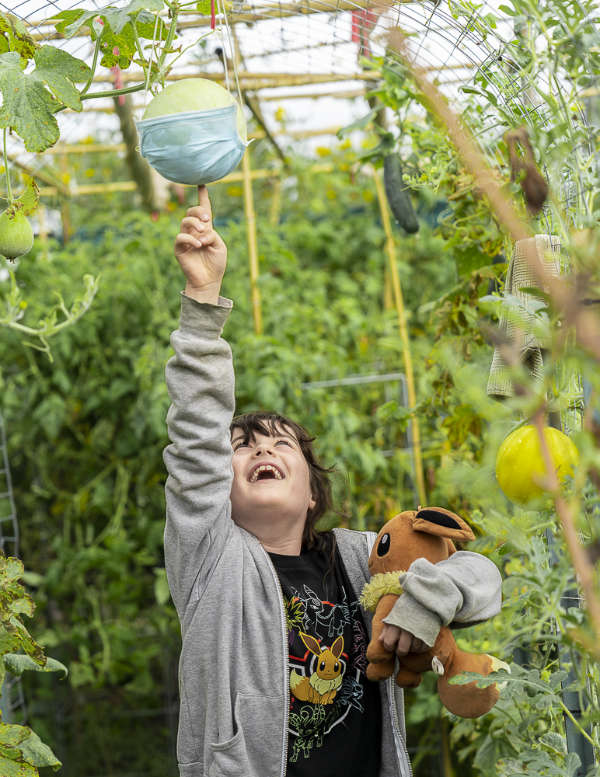 |
At the Altadena garden’s 2023 summer picnic.
(Photo courtesy of Altadena Community Garden)
|
|
The event won’t happen this year, as gardeners patiently remediate the soil. If it tests negative for toxins later this year, the nonprofit will install a sprinkler system and, if all goes well, reopen by early next year. It’s still raising some of the money they estimate they will need to finish remediation, as well as building an office on site.
“As soon as money comes in, it goes out,” said Silvera Grant, a past president of the garden, whom members credit with helping to transform the institution from “one of privilege” to one where access is equal for all.
|
|
|
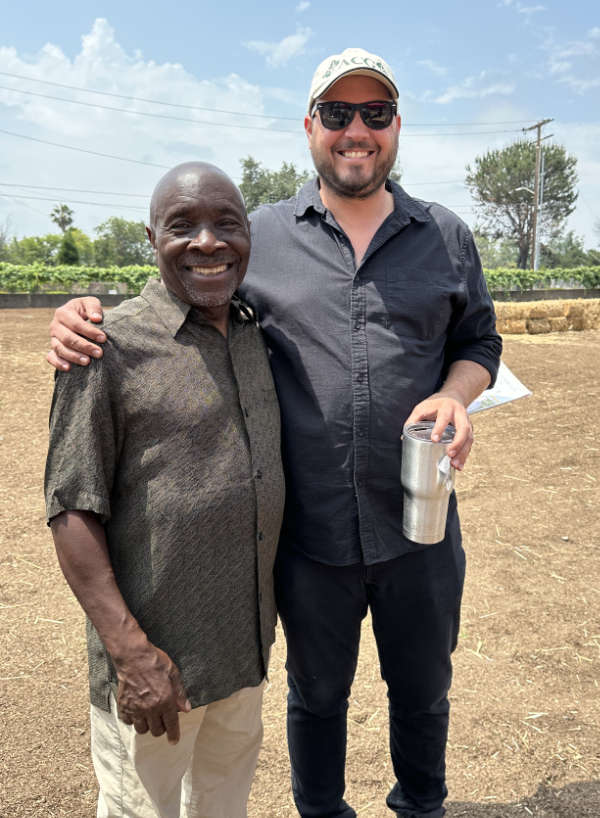 |
Silvera Grant, a past president of the garden, and Joe Nagy, the current president. (Photo credit: Jennifer Oldham)
|
|
The Jamaican-born grandfather shares his space with several others, including Alan Freeman, a retired theater teacher and playwright. Grant invited Freeman, who belongs to his church, to join the garden about a dozen years ago.
“I brought flowers to his garden. He doesn’t really like flowers because he can’t eat them—but I like a little bit of color,” Freeman said as he sat next to Grant and other gardeners around a concrete picnic table, as purple blooms drifted down from a jacaranda tree.
|
|
|
Both men are taking advantage of this downtime to help other members expand a fruit orchard outside the garden’s fence, where the public will be able to pick plums, apricots, avocados, and more, for free. An
education program is also in the works, as is a community crop swap and food share.
For now, gardeners are working to bring back what was lost. When the soil is ready, Freeman will plant flowers, and Grant will sow pepper seeds among them, an embodiment of the longstanding communal ethos of the garden. “When I first came to the garden,” Grant recalled, “a gardener said to me, ‘Silvera, when you plant, you plant for yourself, and you plant for everyone else.’”
|
(Return to top)
|
|
|
|
|
|
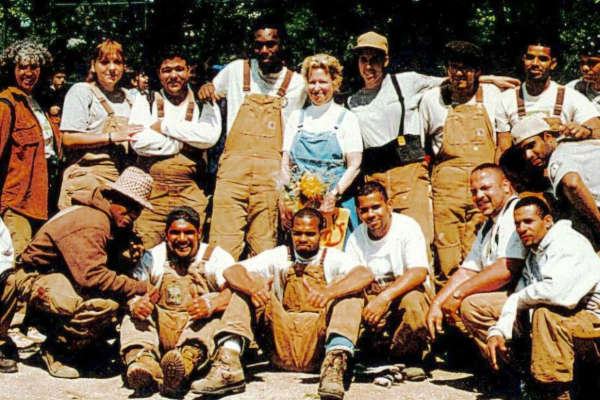 |
Bette Midler (center) with some of the original NYRP crew in the 1990s.
(Photo courtesy of NYRP)
|
|
|
First Look: The New York Restoration Project Turns 30
|
BY JAKE PRICE
|
|
|
This is the first part of an upcoming photo essay covering several community gardens rebuilt by the New York Restoration Project. Except where noted, all photos are by Jake
Price.
This year marks the 30th anniversary of the New York Restoration Project (NYRP), the nonprofit founded by actor Bette Midler to reclaim and restore neglected green spaces across New York City.
Since the 1970s, New York has devoted less than 1 percent of its budget to the Parks Department. In the 1980s and 1990s, chronic underfunding left many public spaces neglected. Empty lots became dumping grounds for abandoned cars, tires, drug waste, and heaps of trash.
By 1995, the situation was dire. That year, while driving her daughter to school on Manhattan’s Upper West Side, Midler noticed the dismal conditions in Fort Tryon Park. Disturbed by the neglect, she brought a group of friends together to clean and restore the site. Their hard work was the seed of what would eventually become NYRP.
|
|
|
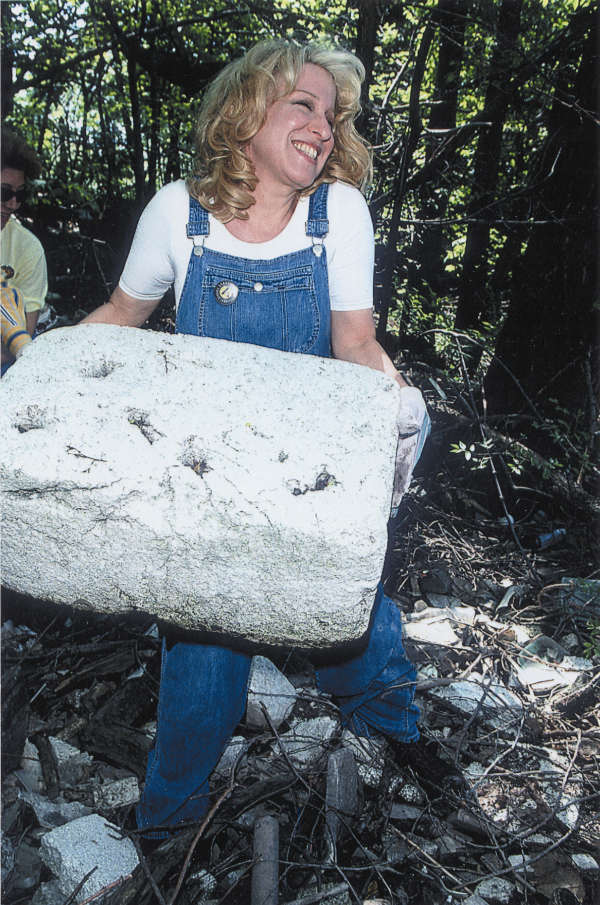 |
NYRP founder Bette Midler cleaning up Styrofoam in a New York City park.
(Photo courtesy of NYRP)
|
|
|
Today, the organization owns and operates 51 community gardens throughout all five boroughs as well as dozens of parks, focusing on underserved neighborhoods. The gardens are part of a land trust funded by a
mixture of private donations and corporate and government funding and are managed by 35 year-round staff, plus another 15 during peak growing season.
NYRP takes a community-centered approach to its restorations. Through its Gardens to the City program, the organization invites interested community groups with available open space to apply through their website for free garden design consultation, materials, and labor to help achieve their garden vision. NYRP prioritizes applications from the city’s least green and historically most underserved neighborhoods.
Lauren Wilson, the NYRP’s communications director, emphasizes how urban gardens speak to the lived experiences of the gardeners themselves. “Many people who immigrate
to New York come from agrarian backgrounds,” Wilson said. “We’ve found that there’s consistently been a desire for people to grow their own food. It’s about nourishment, but it’s also about cultural expression.”
Glover Street Community Garden (the Bronx)
One prime example is the Glover Street Community Garden in the Castle Hill section of the Bronx. Founded in 1982 by local residents, the 1,209‑square‑foot space was redesigned by the NYRP in partnership with the community in November 2016. Contractors did the heavy construction in the summer of 2018, and in October that year, 20 volunteers planted the perimeter. The garden celebrated its reopening on June 8, 2019.
|
|
|
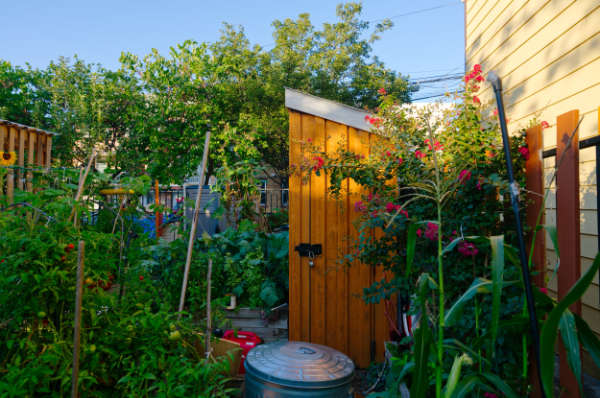 |
The reconstruction also included new fencing and pathways, movable benches and tables, a seating area, a garden tool shed, compost bins, a barbecue, and numerous landscape plantings.
|
|
|
|
|
The garden teems with marigolds, used in the group’s Dia de los Muertos celebration every fall. Seeds from dried marigolds are replanted for the next year.
|
|
|
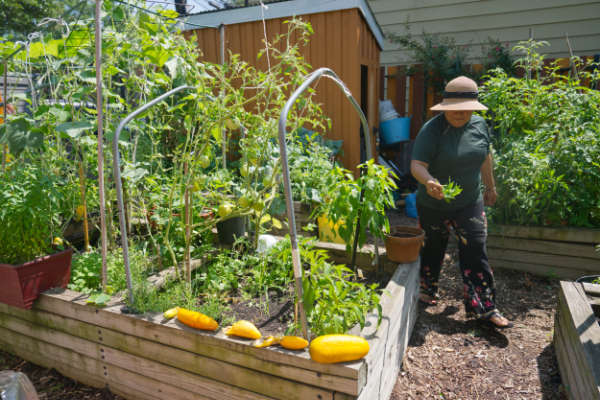 |
Gardeners grow dozens of different kinds of crops, both for their personal use as well as for community giveaways. Popular crops include tomatoes, hot peppers, herbs, and cucumbers.
|
|
|
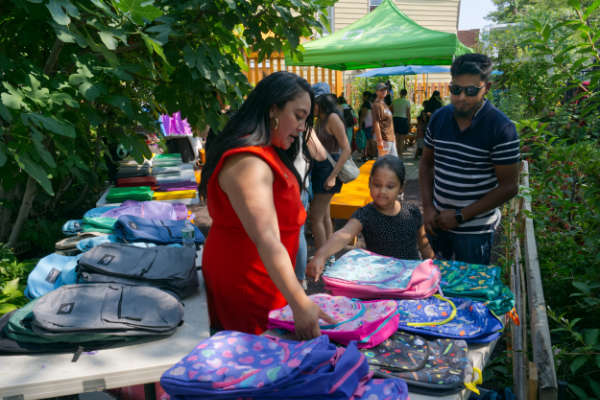 |
Once a year before school starts, the Glover Street Garden hosts a day of free backpacks, school supplies and books. The line to get into the garden stretches for a city block.
|
|
|
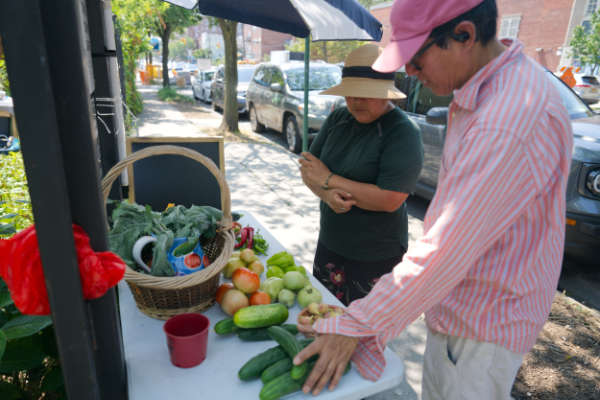 |
Volunteers arrange fruits and vegetables as a free offering to the community at the entrance of the garden.
|
|
|
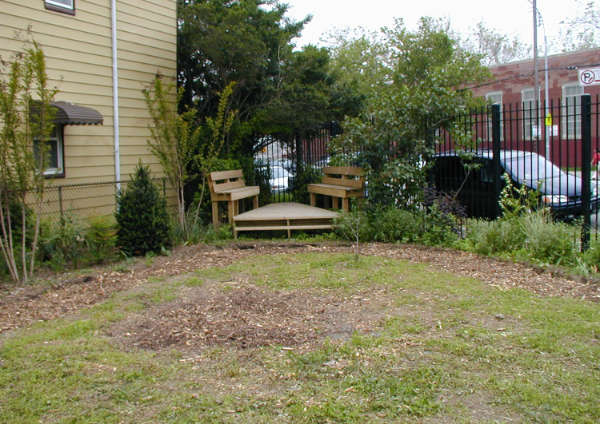 |
The Glover Street Community Garden seven years ago, before the NYRP restoration. (Photo courtesy of New York Restoration Project)
|
|
|
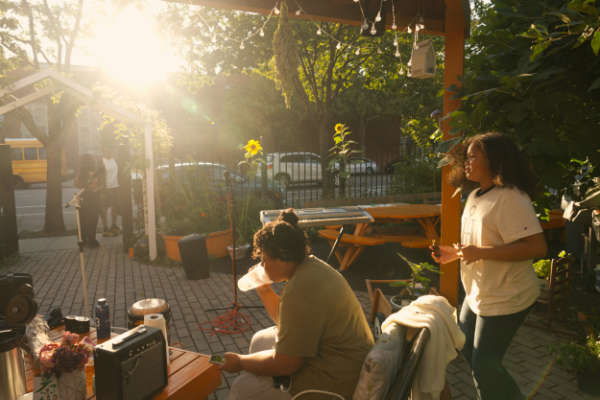 |
The new shaded picnic tables are essential in the heat of summer, in a neighborhood with little accessible green space. Residents celebrate birthdays here and gather for group Sunday suppers.
|
|
|
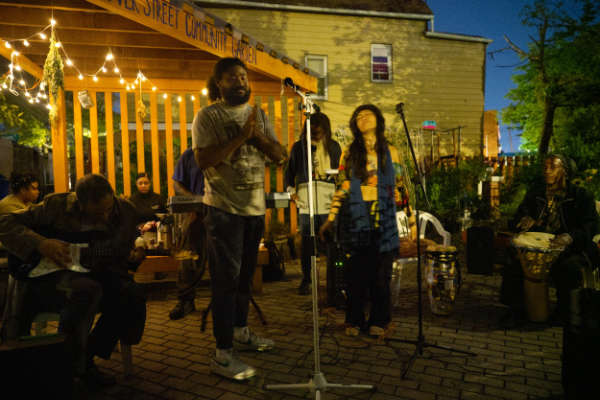 |
The garden frequently hosts open mic and music nights, too, open to all. “When we are at the Glover, we are a familia sharing a safe space,” garden organizer Nia La Salle Mendez says. "We are community, and just like our ancestors, we must sow seeds of prosperity so our connections and traditions continue to bloom.”
|
|
|
|
|
|
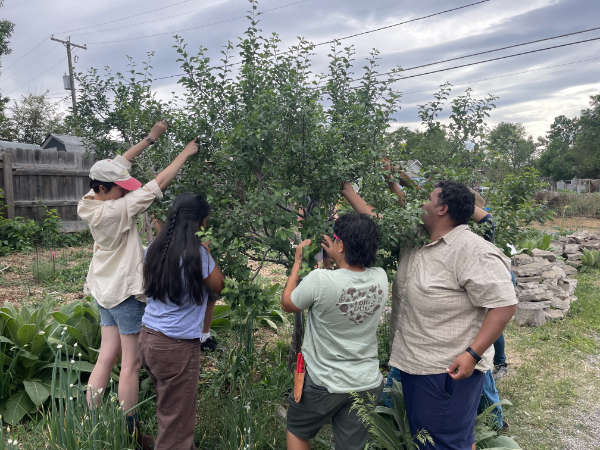 |
Students in Denver Urban Garden’s Food Forestry Training Program thin an apple tree at the Barnum Food Forest. (Photo courtesy of Denver Urban Gardens)
|
|
|
Food Forests Bear Fruit While Combating Pollution and Climate Change
|
BY RILEY RAMIREZ
|
|
|
The urban tree canopy in Denver is one of the sparsest in the country. Only 15 percent of the Colorado capital enjoys tree cover, and that figure drops to a mere 4 percent for the downtown area.
In 2020, when Linda Appel Lipsius became executive director of the decades-old Denver Urban Gardens (DUG) network, which oversees more than 200 community vegetable gardens throughout six metro Denver counties, she wanted to continue increasing community access to fresh food—a longtime goal of the garden program. But she had another aim, too: increasing the city’s tree coverage.
Thinking back to techniques she had learned at the Denver Permaculture Guild, Appel Lipsius decided to build a system of food forests throughout the Denver area. These dense, layered plantings incorporate fruit-bearing trees with other perennials to mimic natural forests.
Now, DUG oversees 26 food forests, with 600 or so fruit and nut trees and 600 berry bushes.
While urban trees are recognized for their multiple benefits, including cooling and carbon drawdown, "there are not a lot of players in Denver, or even in most cities around the country, who are focused on food trees,” Appel Lipsius said. “We were able to step into this space to help build and bolster the canopy while adding food-producing perennials.”
The Benefits of Urban Trees
Denver Urban Gardens started as a grassroots movement in the 1970s when North Denver neighbors created space for a group of local Hmong women to grow their own food. After transforming a vacant parking lot into the Pecos Community Garden, the group helped other neighbors start gardens, too. DUG officially became a nonprofit in 1985, and over the past four decades, it has grown and distributed more than 62,000 pounds of food throughout the metro area.
In the nonprofit’s new food forest spaces, neighbors are welcome to enter and harvest a wide assortment of fruits, nuts, and berries. And unlike in DUG’s community gardens, where people pay a fee to have their own plots, this bounty is free.
Beyond providing fresh food in neighborhoods that need it most, these agroforests reduce the urban heat island effect, create pollinator habitat, and combat pollution and climate change by absorbing and filtering harmful gases. They also create much-needed green space within communities.
“Trees are so beneficial for mental health, neighborhood security, and certainly temperatures,” Appel Lipsius said. “You walk off the street into one of our food forests and it’s 5 to 15 degrees cooler.”
Globally, farmers are increasingly turning to agroforestry techniques—which Indigenous peoples have employed for millennia—to improve, stabilize, and diversify crop yields in the face of climate change.
|
|
|
“Trees are so beneficial for mental health, neighborhood security, and certainly temperatures. You walk off the street into one of our food forests and
it’s five to 15 degrees cooler.”
|
|
|
And across the U.S., cities are embracing agroforestry as well. While Denver has a network of smaller food forests, cities like Seattle and Atlanta have very large standalone sites. Appel Lipsius points out that some cities may have community orchards—or simple plantings of fruit or nut trees—rather than multi-layered food forests.
Building Generational Spaces
DUG leaders used tried-and-tested methods learned through its gardens program to launch the food forests project. In 2022, the organization received seed money from a family foundation to help kickstart its program. With that funding, Appel Lipsius brought on her former permaculture teacher, Creighton Hofeditz, who used the funds to plan six food forest sites.
“It’s a process that requires both vision and patience,” said Hofeditz, now the senior director of gardens and food forests for the group. “This is going to look pretty raggedy for the first few years, but in 10 years, it’s going to be this incredible space to visit and explore for the whole neighborhood, and it’ll last for 100 years. . . . We are thinking about [these food forests] as generational spaces.”
Not long after its seed funding, DUG received a larger grant from a private foundation that enabled the organization to create 20 food forest installations in two years. Additional funding flowed into the program, including federal funds from the Biden administration’s Inflation Reduction Act.
“We went from zero to about 26 food forests in three years, which is just nuts,” Appel Lipsius said. DUG is planning to add four more sites over the next year.
|
|
|
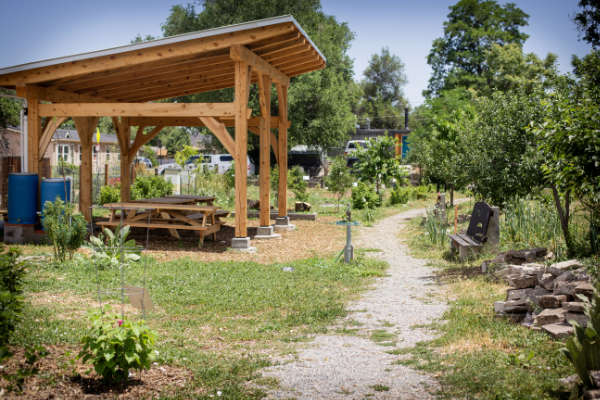 |
The Barnum Food Forest, in Denver’s Barnum neighborhood, has a variety of food-producing trees and bushes and also functions as a multi-purpose gathering area.
(Photo courtesy of Denver Urban Gardens)
|
|
|
Volunteers on the Ground
To get a food forest started, DUG works with landowners—usually public entities such as cities, parks, schools, and churches—to identify potential plots that are between 2,000 and 8,000 square feet, vacant, oddly shaped with some amount of slope, and have water and public access. DUG then forms agreements with the owners allowing the group to use the land for a food forest as long as they maintain it.
Once a forest is in place, community volunteers trained in tree health, pruning, and pest management—known as tree keepers—help tend the site. Additionally, DUG solicits local businesses to sponsor and support the site.
“It’s not just planting trees. These are community-informed designs,” Appel Lipsius said. “It is reliant on the community to survive and thrive.”
Abbie Keyes spends two hours per week at the Bradley International School food forest near her house, tending apple, peach, cherry, mulberry, pawpaw, and hazelnut trees during the growing season. “I love the philosophy of making it so there are ways for the public to get fresh fruit and really understand how accessible it can be,” Keyes said. “I think it’s a neat way to help people realize where their food comes from.”
|
|
|
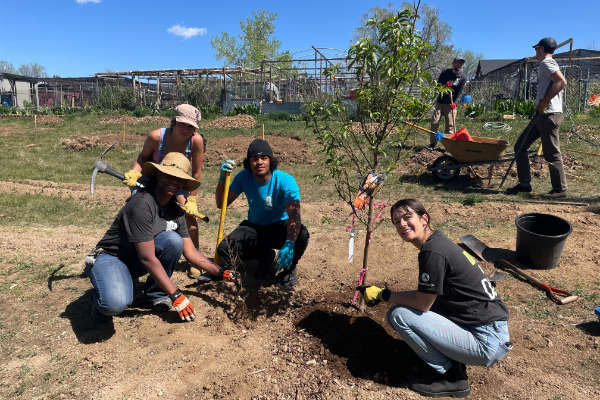 |
DUG staff and volunteers plant a peach tree alongside a silver buffalo berry, a nitrogen-fixing plant, at the Living Light of Peace Food Forest in Arvada.
(Photo courtesy of Denver Urban Gardens)
|
|
|
Olivia Stockert began volunteering at DUG’s flagship food forest, the Barnum Orchard, in 2022, soon after the program started. Over the years, she has witnessed the orchard—which was planted by neighbors in
2016 and later adopted by DUG—change significantly.
“That’s been one of the most rewarding parts of the volunteer role—seeing the evolution,” she said. “Having some of these small trees that were planted when I first started volunteering now large enough to actually bear fruit is really cool.”
Adjusting to the New Funding Reality
In March 2023, the Denver City Council unanimously passed the West Area Plan—a roadmap to improve the quality of life for residents in Denver West, a working-class, predominately Latinx area that had historically been redlined and lacked green space and grocery stores.
As part of the plan, DUG created the Dig Deeper Initiative to establish six community gardens and nine food forests in several neighborhoods. DUG received two federal grants totaling $850,000 for the initiative under the Biden administration, but both have been terminated since Trump took office.
“It’s a real shame to see these kinds of projects cut,” said Councilwoman Jamie Torres, who represents Denver West’s District 3, “because they directly meet the needs of a community . . . with, frankly, not that much investment.”
The loss of $850,000 from a $4.2 million budget has been no small blow, Appel Lipsius said, adding that other DUG funders now seem nervous about contributing. “It’s just heartbreaking, because this was something that the whole organization was going to be singularly focused on for the next three years,” Appel Lipsius said. “Years of planning, as well, are just out the window now.”
The Dig Deeper Initiative has not been entirely lost, however; leaders have reduced the scope from six gardens to two and from nine food forests to three, and will follow through on their plans for those.
Despite the roadblocks, Appel Lipsius said DUG will continue its mission to regenerate urban green space and grow healthy food in the community. They’re dedicated to the food forest program as well, Hofeditz said, with the goal of “creating a geographic spread so that you can be anywhere in the city and be pretty close to a food forest.”
|
|
|
|
|
|
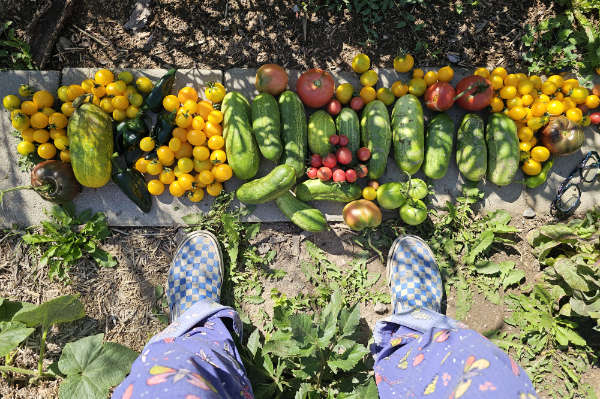 |
Bounty from the first season at East Missoula Community Garden. (Photo credit: Erika Hickey)
|
|
|
|
|
From her home in East Missoula, Montana, Erika Hickey could see an empty field next to a school—a “gigantic lawn that gets watered every day.” Some people in the community
used it, but, she said, “its potential was staring at me in the face—why isn’t there a garden here?”
Located outside Missoula’s city limits, unincorporated East Missoula is flush with apartment buildings and storage rental facilities, but the nearest grocery store is about three miles away and public transportation is limited. Hickey, a small-business owner who leads a neighborhood group called East Missoula United, saw a community garden as a way to boost access to fresh fruit and vegetables while building neighborly connections.
She enlisted the help of Garden City Harvest, a Missoula nonprofit that manages neighborhood farms and gardens. In 2021, Garden City obtained county permission to use the site (for free!) and then surveyed East Missoula residents to gauge support. Finding it, they raised funds, recruited aspiring gardeners, and prepared the land.
|
|
|
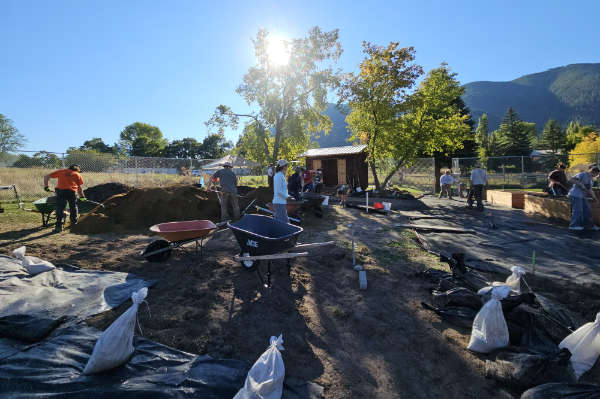 |
A team of volunteers prepares the site for the East Missoula Community Garden, which opened in May after four years of planning. (Photo credit: Erika Hickey)
|
|
|
The East Missoula Community Garden opened in May this year with 45 plots, which it rents to individuals and families on a sliding scale for $45 to $85 per season, depending on income.
The project had all the ingredients critical for a successful community garden: land with water, sun, and an agreeable owner; passionate volunteers and neighborhood support; and the necessary leadership, organization, and funding infrastructure.
Its success—and the success of similar efforts elsewhere in the country—provides a model for those looking to start their own. Here’s what it takes.
Secure the Right Site
The land used for a community garden may be owned by a government, church, school, business, real estate development, or an individual.
Cordalie Benoit, vice president of the American Community Gardening Association, often inspects sites for potential community gardens. She looks for ample sun and access to water and advises anyone who is planning to plant directly into soil, rather than in raised beds, to test it to make sure it is safe for growing fruits and vegetables.
To ensure longevity, Garden City Harvest recommends that would-be gardeners engage a lawyer to create a lease agreement with the landowner, or use sample forms online to develop their own. The nonprofit typically enters into 10-year land agreements.
Once they have secured the site, community garden organizers need to decide how to divide the space and accommodate infrastructure, such as sheds for communal tools. Fencing may be required to protect the produce from wildlife or careless passersby.
Decide How to Work Together
Labor and food distribution models vary widely. Some community gardens, like the one in East Missoula, allot plots to individuals or families to grow their own food for an income-based fee. Churches or nonprofit-based gardens often maintain the garden communally and donate their harvests to food pantries or those in need. Alternatively, all members may garden together and share the bounty based on how much work each puts in.
|
|
|
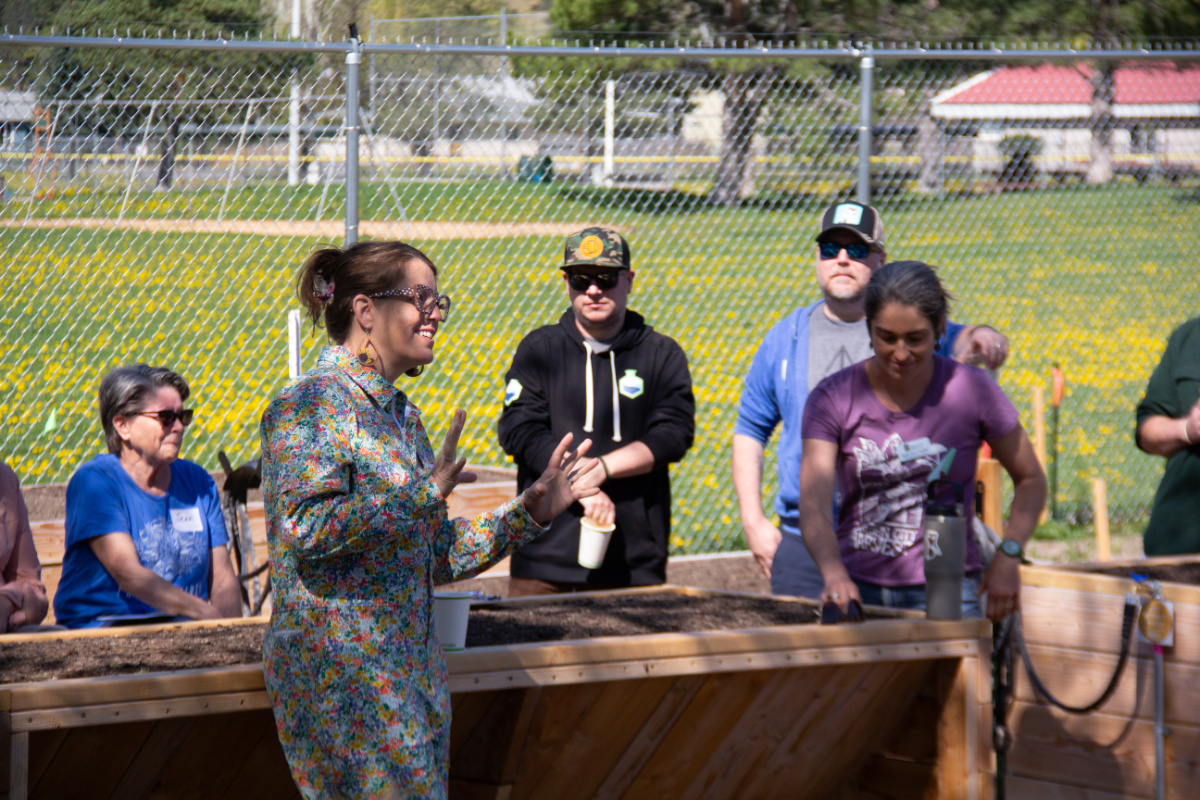 |
Erika Hickey congratulates fellow gardeners and supporters at the ribbon-cutting ceremony for the garden. (Photo credit: Gabby Friedlander)
|
|
|
Community gardens often have a leadership committee or core group that makes decisions, although all gardeners should be able to vote on major questions, such as whether to incorporate beehives. New or updated
rules should be put in writing and agreed to by all or most gardeners.
While it is helpful to have people with gardening knowledge in leadership positions, volunteers can contribute in many ways, by making repairs, pulling weeds, and raising funds.
“When we’re talking about community gardens, ‘community’ is the more important word, because without the community, you just have a bunch of soil, and pretty much everybody goes home, because it’s a lot of work,” said Kitty Wallace, a retired educator who co-founded Florida’s Tampa Heights Community Garden in 2011 with Lena Young Green, a former state legislature employee.
Benoit encourages groups to use their gardens as community assets, perhaps adding picnic tables and benches to give neighbors a place to eat outside. She has also seen community gardens host movie nights or serve ice cream to neighbors. “Bring the community in,” she said.
Solicit Funding and Support
The East Missoula Community Garden cost more than $100,000 to start, in part because Garden City Harvest added major water infrastructure.
“If a community group were trying to do this from scratch, the key would be to get a lot of in-kind donations from local businesses,” said Genevieve Jessop Marsh, the nonprofit’s outreach and impact director.
While city or county parks and recreation departments often play key roles, nonprofits like Garden City Harvest, which exist in many towns and cities, can oversee garden management, make repairs, and provide advice and resources like tools and seeds.
These organizations can also offer liability insurance to cover claims arising from injuries that occur at the garden. If no nonprofit is involved, community gardens should have their own liability insurance, which may be the garden’s largest expense.
State Agricultural Experiment Stations, usually hosted at land-grant colleges or universities, can be helpful resources, sharing agricultural advice with community gardeners and oftentimes offering public workshops and services like soil testing, Benoit said.
|
|
|
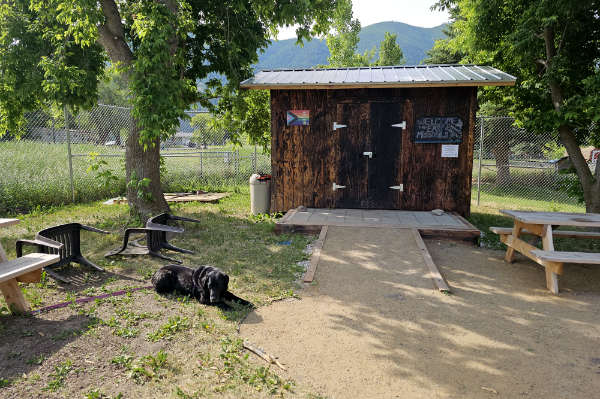 |
A tool shed built by Habitat for Humanity for the East Missoula Community Garden. Erika’s dog, Balloon, usually comes to the garden with her. (Photo credit: Erika Hickey)
|
|
|
Because running a community garden can get expensive—between the required permits, infrastructure, and tools—securing partners and raising funds is essential. Local businesses and community groups, like senior
centers or Rotary Clubs, may be able to offer volunteers or donate funds.
Serve Your Community
Some community gardens serve specific populations, such as farmworkers, seniors, or people with disabilities.
Hospitals are creating gardens for their employees or as educational tools for patients suffering from diet-related illnesses. “In Hartford, Connecticut, Aetna has supported [nonprofit] Knox, which has community gardens, because they know that healthy people are going to need less health insurance payments,” Benoit says.
Community gardens are also increasingly common at schools and universities, where they can be used as part of the curriculum. “You can talk history, culture, mathematics, nutrition, botany, biology,” Benoit said. “There’s hardly a subject you can’t talk about in a garden.”
Learn and Share
After they co-founded the Tampa Heights Community Garden in 2011, Wallace and Young Green noticed that many nearby gardens were failing. That inspired them to launch the Coalition of Community Gardens, a nonprofit that now supports more than 60 community gardens in five counties in the Tampa Bay area.
The coalition worked with the city of Tampa and University of Florida’s Institute of Food and Agricultural Sciences extension office to develop an online community garden specialist training program; the online course from the program is still available for free. Other extension offices around the country provide toolkits and guides, and the American Community Gardening Association offers a 10-step plan.
|
|
|
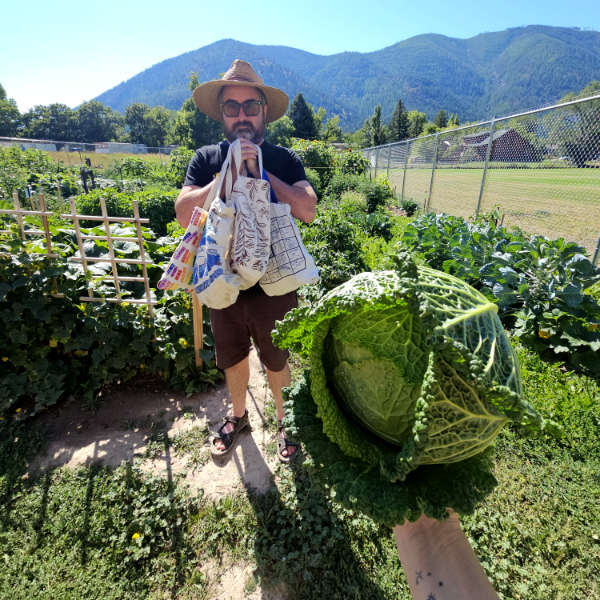 |
Shane Hickey, Erika’s husband, helps her haul their harvest home. (Photo credit: Erika Hickey)
|
|
|
While many resources exist online and elsewhere, visiting community gardens near you can be the most valuable form of research. And don’t forget to spread the word and bring others along for the journey.
“I feel like the more people you talk to and share your ideas with, the more possible things become that might have seemed a little unattainable,” Hickey said from the East Missoula Community Garden. “The garden is more exciting than I ever thought it was going to be. I love it so much.”
|
|
|
|
|
|
Civil Eats Member Community Gardens |
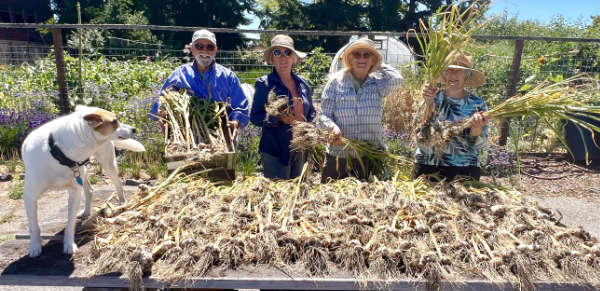 |
The Food Bank Growers with the season’s garlic crop at Port Townsend High School Garden, Washington state. Left to right: Daisy, career deer chaser; Master Gardener and Manager Doug Van Allen; volunteers Judy Surber, Ruth Blyther, and Civil Eats Member Kathy Ryan. (Photo credit: Mary Hunt)
|
The Food Bank Growers, Quimper Peninsula, Washington
(submitted by Civil Eats Member Kathy Ryan)
|
The Food Bank Growers is an 11-year-old network of volunteer growers in 14 gardens on Washington State’s Quimper Peninsula. We harvest from school gardens, and recently published a book, Interplanted, about the Port Townsend school garden-to-table lunch program. We also partner with Quimper First Harvest, which gleans over 5,000
pounds of local fruit annually. We donate 20,000 pounds of fresh, organically grown produce every year to local food banks (65 percent) and schools (30 percent), with the balance going to other local distributors.
I’ve been involved with Food Bank Growers since 2014, and am part of feeding neighbors—critical given all the federal cuts! Our greatest challenge is growing to meet the need. We are fortunate to have strong, committed community partners.
|
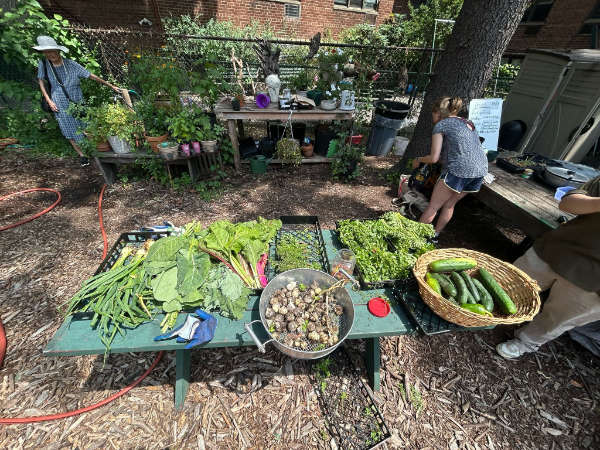 |
Fresh produce from the Moore Jackson garden in New York City includes collard greens, Swiss chard, garlic, an assortment of herbs, and cucumbers. (Photo credit: Karina Vasquez)
|
The Moore Jackson Community Garden, Queens, New York
(submitted by Civil Eats Member Karina Vasquez)
|
Our garden sits on a half acre of land that also houses a colonial-era cemetery. We rent the space from the Queens Historical Society for $1 a year, and in return, we maintain the gravestones, some dating back to the 18th century.
Our space is wonderfully multigenerational and community driven. With the help of local nonprofit Astoria Woodworkers Collective, we built a puppet theater and plenty of seating for workshops and events. Local schools regularly use the garden for nature-based education, and volunteers from all walks of life join us to compost using a unique system called paca digestora. We also have our own hives, managed by the Island Bee Project, and produce honey.
The garden is filled with pollinator-friendly and edible plants, and every Saturday, we open our gates all day for neighbors. The space has hosted everything from children’s workshops to birthday parties and even a few weddings.
We’re deeply proud of what this garden has become: a place where our diverse community can come together for some much-needed outdoor time and for what feels like an escape from city life.
|
|
|
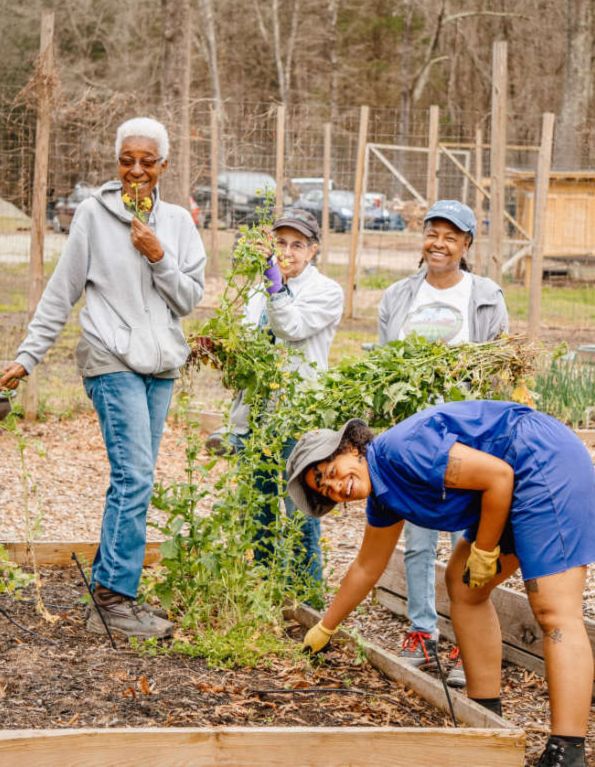 |
UCAN Executive Director and Co-Founder Delphine Sellars (left), with community gardeners. (Photo credit: Aniya Bourne, UCAN)
|
|
Catawba Trail Farm and Community Garden, Durham, North Carolina
(submitted by Civil Eats Member Katie Murray)
|
Urban Community AgriNomics (UCAN), which oversees Catawba Trail Farm and Community Garden, works to improve the health and well-being of our community by providing access to open green spaces and 47 community garden beds.
|
|
|
They also offer educational programming to support healthy lifestyles and reduce food insecurity in Durham through regular distributions of healthy, locally grown food. Their Gardeners as Teachers Workshop, for
instance, is a hands-on experience rooted in Southern and Afro-Caribbean herbal traditions that invites participants to learn about summer herbs, honor ancestral practices, and create their own sun teas and herbal sprays.
|
|
|
|
|
|
In Case You Missed It |
Some of our recent community garden reporting
|
|
|
|
|
|
|
That's all for this issue of The Deep Dish. Thank you for reading, and thank you for being a member of the Civil Eats community. If this is your first time reading The Deep Dish (welcome!), be sure to check out our previous issues:
|
If someone forwarded this email to you, please support our work and become a member today. Questions? Compliments? Suggestions? We love to hear from our members: Please send us a note at members@civileats.com.
|
(Return to top)
|
|
|
|
|
|
|
|
|